

Introduction
An animal feed plant is a facility that converts raw materials into nutritionally balanced feed for livestock, poultry, aquaculture, and other animals. These plants play a vital role in modern agriculture by providing consistent, high-quality feed that promotes animal growth, health, and productivity.
The demand for animal feed processing plants has increased worldwide due to the expansion of intensive animal farming and the need for efficient feed production. The cost and design of such plants vary depending on production capacity, level of automation, type of feed produced, and the diversity of raw materials.
Overview of Animal Feed Processing
Animal feed processing encompasses several operations, including grinding, mixing, conditioning, pelleting, cooling, and packaging. These steps ensure that raw materials such as grains, protein meals, vitamins, minerals, and fibrous by-products are transformed into uniform feed suitable for different species.
Processing feed into pellets or crumbles has multiple benefits:
Improves feed conversion efficiency
Reduces selective feeding behavior
Enhances digestibility
Minimizes waste and storage issues
Core Components of an Animal Feed Processing Plant
A typical plant consists of several functional units:
Raw Material Storage and Handling
Silos, hoppers, conveyors
Ensure continuous supply and proper material flow
Grinding and Pulverizing Section
Hammer mills or roller mills reduce particle size
Prepares materials for mixing and pelleting
Mixing System
Ensures even distribution of nutrients, additives, and premixes
High-quality mixers prevent nutrient segregation
Conditioning and Pelletizing
Steam or water is added to soften ingredients
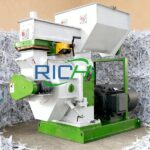
Pelleting machines, either flat die or ring die, form uniform feed
Machines from reputable manufacturers like RICHI optimize durability and pellet quality
Cooling and Screening
Reduces moisture to improve storage stability
Screens remove fines or oversized particles
Packaging and Storage
Automatic or semi-automatic bagging systems
Ensures efficient delivery to farms or markets
Types of Animal Feed Processing Plants
Small-Scale Plants
Production capacity: 1–5 tons per hour
Suitable for local farms or small cooperatives
Limited automation and lower cost
Medium-Scale Plants
Production capacity: 5–20 tons per hour
Semi-automated operation
Often used by regional feed mills or integrated livestock operations
Industrial-Scale Plants
Production capacity: 20–50+ tons per hour
Fully automated, integrated systems
High investment but capable of continuous production
Suppliers like RICHI provide modular and scalable solutions
Raw Materials in Animal Feed Processing
Animal feed processing plants utilize a wide variety of raw materials:
Cereal grains: corn, wheat, barley, sorghum
Protein meals: soybean meal, fish meal, cottonseed meal
Fibrous materials: alfalfa meal, rice bran, wheat bran
Vitamins and minerals: premixes for balanced nutrition
Additives: enzymes, probiotics, amino acids
The adaptability of a plant to various raw materials affects both price and operational efficiency. https://richipelletizer.com/animal-feed-production-line/
Factors Affecting Animal Feed Processing Plant Cost
The animal feed processing plant cost is influenced by multiple factors:
Production Capacity: Higher throughput requires larger, more robust machines
Automation Level: Automatic feeding, lubrication, and monitoring systems increase cost but improve efficiency
Machine Quality and Material: Alloy steel dies and rollers increase upfront investment
Plant Layout and Infrastructure: Size, building design, and integration with material handling affect total cost
Local Market and Logistics: Import duties, transport, and regional supply chain impact final price
Choosing a plant involves balancing initial investment with long-term operational efficiency.
Operating Costs and Maintenance
Operating an animal feed processing plant involves ongoing expenses:
Electricity consumption
Labor costs
Routine maintenance, such as die and roller replacement
Raw material handling and storage
Machines from manufacturers such as RICHI are designed for reliability, minimizing downtime and maintenance frequency. Proper maintenance extends the lifespan of components and ensures consistent feed quality. Look at this now
Environmental and Sustainability Considerations
Modern animal feed processing plants emphasize energy efficiency and sustainable practices:
Use of agricultural by-products reduces waste
Energy-efficient motors and systems reduce electricity consumption
Proper feed pelletization improves nutrient absorption, reducing feed waste
Dust collection and emission control enhance environmental compliance
These features align with global trends toward sustainable livestock farming.
Global Market Trends
The demand for animal feed processing plants is growing worldwide:
Asia, Africa, and Latin America experience rapid expansion in livestock production
Technological innovation drives adoption of automated, high-efficiency plants
Competition among manufacturers, including RICHI Pellet Machine, helps stabilize pricing and improve product quality
Modular and scalable plant designs allow flexibility for emerging markets
Future Outlook
As livestock and poultry industries continue to expand, animal feed processing plants will increasingly incorporate:
Digital monitoring systems for precise feed formulation
Energy-efficient motors and components
Modular layouts for flexible capacity adjustment
Sustainable practices for waste reduction and resource efficiency
These trends influence both the plant design and its cost structure, helping farmers and feed producers optimize productivity and profitability.
Conclusion
An animal feed processing plant is a critical component of modern livestock farming, providing consistent, high-quality feed for various species. Factors influencing cost include production capacity, automation, material quality, and regional market conditions. By evaluating these factors alongside operational efficiency and long-term sustainability, feed producers can make informed decisions to support profitable and environmentally responsible animal husbandry. Small pellet mill for sale uk


