

Uzbekistan, a Central Asian country with a profound agricultural heritage, has been stepping up the modernization of its poultry industry in recent years. As the cornerstone of high-quality poultry farming, the poultry feed production line in Uzbekistan has become a core focus of industrial upgrading.
Driven by robust market demand, favorable government policies and advanced technology introduction, this sector is witnessing rapid growth. This article explores the current development status, core technologies, typical projects and future trends of poultry feed production lines in Uzbekistan, uncovering the huge potential of this emerging industry.
Policy Support and Market Demand: Dual Drivers of Industry Growth
The booming development of poultry feed production lines in Uzbekistan is closely linked to strong national policy support and surging market demand. To boost the sustainable development of the poultry industry, the Uzbekistan government issued Presidential Resolution No. PP-281 in June 2022.
This resolution explicitly strengthens state support for the poultry farming sector, including special subsidies for poultry feed production and preferential policies for related enterprises. Qualified poultry breeding enterprises registered on the official website “my.vet.gov.uz” can enjoy these state subsidies and preferences, greatly stimulating enterprises’ enthusiasm to invest in building modern poultry feed production lines.
On the market demand side, Uzbekistan’s population of around 35 million is growing steadily, fueling increasing demand for high-quality poultry products such as eggs and broiler meat. With the improvement of residents’ living standards and health awareness, consumers have higher requirements for the safety and quality of poultry products.
This demand directly drives the need for high-standard compound poultry feed. However, the country’s feed production capacity has dropped by 73% since independence, resulting in a huge supply gap that relies heavily on imports. This market contradiction creates broad development space for local construction of modern poultry feed production lines, especially automatic poultry feed pellet production lines.
Core Technology and Equipment: The Backbone of Production Lines
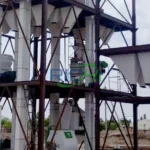
Modern poultry feed production lines in Uzbekistan integrate multiple key processes, including raw material processing, precise batching, uniform mixing, pelletizing, cooling and automatic packaging. These production lines focus on efficiency, environmental protection and nutritional balance to meet the needs of different breeding scales.
Local enterprises usually adopt customized poultry feed production line solutions based on actual needs, with production capacities ranging from 3-5 tons per hour to 10-15 tons per hour. This covers both small and medium-sized family farms and large-scale commercial poultry breeding bases.
The raw material selection of poultry feed production lines in Uzbekistan is closely integrated with local agricultural resources. Corn, wheat and rice bran produced locally are used as the main energy raw materials, ensuring cost-effectiveness and supply stability.
They are supplemented by cottonseed meal, sunflower seed meal and other local oil by-products to provide sufficient protein. In addition, vitamin premixes, mineral additives and bone meal are scientifically blended to meet the nutritional needs of poultry at different growth stages, such as 1-2 mm feed for baby chickens and 3-4 mm pellets for broilers. This localized raw material matching optimizes the cost structure of poultry feed production lines.
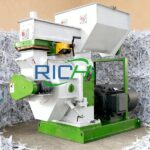
In terms of core equipment, Uzbekistan’s poultry feed production lines mainly adopt advanced foreign technologies while adapting to local working conditions. Key equipment such as hammer crushers, automatic batching systems, twin-shaft mixers and pellet mills boasts high efficiency and stable operation.
For instance, the 15 t/h poultry feed production line in Tashkent is equipped with a fully automatic control system, realizing precise batching and continuous production. The feed pellet size can be adjusted between 2-6 mm according to breeding needs. Post-pelletizing cooling and screening equipment ensures good fluidity and storage stability of finished feed, laying a solid foundation for high-quality poultry breeding.
(straight from the source: https://pelletisingmachine.com/poultry-feed-production-line/)
Typical Projects: Practice and Demonstration Effects
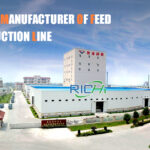
In recent years, a number of successful poultry feed production line projects have emerged in Uzbekistan, setting a good example for the industry’s development. RICHI Machinery, a leading global equipment supplier, has participated in building 16 complete animal feed plants in Uzbekistan within just two years.
These projects cover major regions such as Tashkent, Samarkand and Fergana, including various types of production lines. They range from small-scale 3-5 t/h chicken feed mill plants to large-scale combined lines integrating poultry feed and premix production, fully meeting the diversified needs of the local market.
A typical project in Samarkand, launched in July 2020, is a 3-5 t/h broiler feed pelletizing plant. The customer originally relied on small flat die feed machines, which led to problems such as unstable commercial feed quality and fluctuating prices.
To solve these issues, they decided to build a modern poultry feed production line. After over a year of design and construction, the line was put into operation in August 2021. It not only supplies feed for its own broiler farms but also sells to neighboring producers. With local corn and wheat as raw materials, the line has a main power of 118 kW, a workshop area of 9m×7m×13m and a total investment of 53,000 US dollars. Its success proves that small and medium-sized poultry feed production lines are highly adaptable to the local market.
Another influential project is the 10 t/h poultry feed plant and 5 t/h premix production line in Tashkent, a turnkey project undertaken by RICHI Machinery. Construction started in December 2018 and production began in early 2019, with a total investment of 150,000-300,000 US dollars.
Benefiting from government subsidies for poultry feed production lines, the project effectively reduces construction costs and improves production efficiency. The premix production line can produce high-precision nutritional additives, further enhancing the quality of local poultry feed and driving the upgrading of the entire poultry industry chain.
Challenges and Future Prospects
Despite rapid development, the poultry feed production line industry in Uzbekistan still faces several challenges. First, the overall level of local technical talents is relatively low, resulting in a shortage of professional personnel for equipment operation and maintenance of poultry feed production lines.
Second, the supply of some high-quality additives is insufficient, and long-term reliance on imports affects the stability of production costs. Third, small and medium-sized farms are scattered, leading to fragmented demand for poultry feed production lines and increasing market development difficulty.
Looking ahead, the poultry feed production line in Uzbekistan has broad development prospects. With the deepening of government support policies, more funds will flow into this sector, promoting the popularization of large-scale and automatic poultry feed production lines.
The integration of information technology, such as the upgrading of the “my.vet.gov.uz” website, will realize full-process traceability of feed production, further improving product quality and safety. In addition, circular agriculture development will promote the recycling of agricultural by-products in feed production, reducing environmental pressure and optimizing costs for poultry feed production lines.
For foreign investors and equipment suppliers, the Uzbekistan poultry feed production line market is a rare opportunity. By adapting to local raw material characteristics and market needs, and providing cost-effective equipment and technical services, they can achieve win-win cooperation with local enterprises.
Meanwhile, the localization of core components and professional technical training for poultry feed production lines will improve the industry’s sustainability. This will further promote the healthy and rapid development of Uzbekistan’s poultry feed production line sector.
(view)


