Introduction: The Shift Toward Industrial Aquaculture
The global aquaculture industry is undergoing a structural transformation. Traditional fish farming methods that relied on small-scale feeding and manual operations are being replaced by industrialized production systems. This shift is driven by increasing demand for protein, urban population growth, and sustainability pressures on wild fish resources.
At the center of this transformation is feed production technology. Feed is no longer just a nutritional input—it is a core industrial product that determines growth performance, survival rates, and production efficiency.
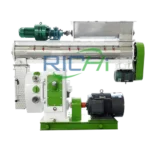
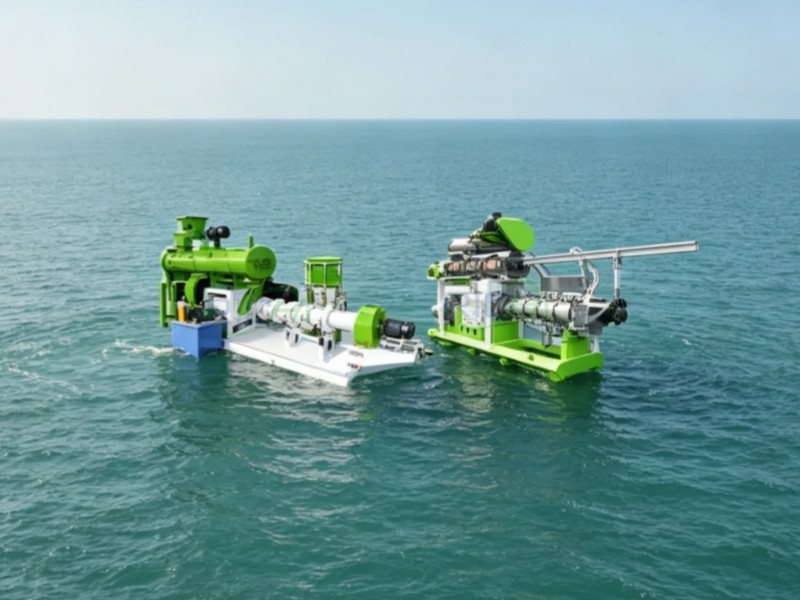
Modern aquaculture facilities increasingly depend on extrusion-based systems to achieve consistent, high-quality feed output. Among these systems, compact and efficient machinery such as single screw extruder machine remains widely used in commercial production due to its operational stability and cost-effectiveness.
1. Evolution of Feed Processing Technology
Feed production has evolved significantly over the past decades, passing through several stages of industrial development.
1.1 Manual feed preparation era
In early aquaculture systems, farmers manually mixed raw ingredients such as fishmeal, corn powder, and soybean meal. This approach lacked consistency and nutritional accuracy, resulting in uneven fish growth and high feed waste.
1.2 Mechanical pellet pressing systems
The introduction of pellet mills improved production efficiency, but these systems still lacked the ability to produce floating feed with stable water resistance. Nutrient loss in water remained a significant issue.
1.3 Modern extrusion-based systems
Today, extrusion technology has become the dominant method in aquafeed production. It enables controlled expansion, gelatinization, and density adjustment, making it possible to produce both floating and sinking feed.
This technological shift has led to rising demand for systems such as floating fish feed extruder system 1 ton per hour industrial capacity solution, particularly in developing aquaculture markets.
2. Why Floating Fish Feed Has Become the Industry Standard
Floating feed plays a crucial role in modern aquaculture operations due to its operational and economic advantages.
2.1 Feeding efficiency monitoring
Floating pellets allow farmers to visually monitor feeding behavior, ensuring that fish consume the required amount of feed without excessive waste.
2.2 Improved water quality
Unlike sinking feed, floating pellets reduce accumulation on pond bottoms, preventing water pollution and reducing ammonia buildup.
2.3 Better feed conversion ratio (FCR)
Improved digestibility and controlled feeding behavior significantly enhance feed conversion efficiency.
2.4 Economic optimization
Reduced waste and improved growth performance directly improve farm profitability.
As a result, global demand for equipment such as automatic fish feed extrusion machine turnkey production line solution continues to grow steadily.
3. Capacity Design in Modern Feed Factories
Feed production plants are designed according to output requirements and investment scale.
3.1 Small-scale production systems (0.2–1 T/H)
These systems are widely used in:
- Small farms
- Pilot production projects
- Local feed suppliers
They offer low investment requirements and simple operational structures.
In many developing regions, 0.2–1 T/H fish feed extruder for sale systems represent the most accessible entry point for aquaculture entrepreneurs.
3.2 Medium-scale production systems (1–2 T/H)
These systems are suitable for:
- Regional feed manufacturers
- Commercial aquaculture suppliers
- Medium-sized industrial plants
They balance production efficiency and investment cost.
3.3 Large-scale industrial systems (2–3 T/H and above)
These systems are designed for:
- Export-oriented feed factories
- Large aquaculture corporations
- Fully automated production environments
The 2–3 T/H floating fish feed extruder for sale industrial production system category is widely adopted in high-output facilities.
4. Working Principle of Single Screw Extrusion Systems
The extrusion process is based on controlled mechanical and thermal energy transformation.
4.1 Feeding and conveying stage
Raw materials are introduced into the system and transported forward by a rotating screw.
4.2 Compression and cooking stage
Inside the barrel, pressure and temperature increase significantly, causing starch gelatinization and protein restructuring.
4.3 Expansion and shaping stage
Material exits through a die, expanding into uniform pellets with controlled density.
This process ensures:
- Consistent pellet size
- Controlled buoyancy
- High digestibility
- Improved feed stability
This is why systems like single screw extruder for sale industrial feed production applications remain widely adopted in global markets.
5. Full Feed Production Line Integration
A modern feed factory is not a standalone machine setup but a fully integrated production system.
A complete line typically includes:
- Raw material crushing system
- Mixing system
- Conditioning system
- Extrusion system
- Drying system
- Oil coating system
- Cooling system
- Packaging system
Each stage plays a critical role in determining final product quality.
Engineering companies such as Richi pellet machine provide complete turnkey solutions covering design, manufacturing, installation, and commissioning.
6. Technical Challenges in Feed Manufacturing
Despite technological advancement, several challenges remain:
6.1 Raw material variability
Different protein and moisture levels affect extrusion stability.
6.2 Energy consumption
Extrusion processes require controlled high energy input.
6.3 Equipment wear
Screw and barrel components degrade over time due to friction.
6.4 Product consistency
Maintaining uniform pellet quality is essential for commercial competitiveness.
7. Technological Innovation Trends
Modern extrusion systems are evolving toward:
7.1 Intelligent automation systems
Real-time monitoring of temperature, pressure, and output.
7.2 High durability materials
Improved wear resistance for longer service life.
7.3 Energy efficiency optimization
Reduced energy consumption per ton of feed.
7.4 Automated feeding systems
Stable raw material input improves production consistency.
These innovations significantly improve operational efficiency and reduce long-term production costs.
8. Global Market Expansion Trends
Aquaculture feed demand is increasing rapidly in:
- Southeast Asia
- South America
- Africa
- Eastern Europe
Investors increasingly rely on technical references such as industrial fish feed extrusion technology and production optimization guide platform when evaluating equipment solutions and production strategies.
9. Role of Equipment Manufacturers in Industry Development
Reliable equipment suppliers play a crucial role in ensuring production success.
Companies like Richi Pellet Machine provide:
- Customized production line design
- Installation and commissioning
- Operator training
- Spare parts supply
- Long-term technical support
This reduces investment risk and improves production stability for new factories.
10. Economic Evaluation of Extrusion Systems
Although extrusion systems require higher initial investment, they offer strong long-term economic benefits:
- Reduced feed waste
- Higher production efficiency
- Improved product pricing
- Lower maintenance costs
- Increased market competitiveness
11. Application Scope of Extrusion Technology
Extrusion systems are widely used in:
- Aquaculture feed production
- Shrimp farming feed systems
- Pet food manufacturing
- Biomass pellet processing
- Agricultural waste utilization
This versatility makes extrusion one of the most important technologies in modern feed industries.
Conclusion: The Future of Aquaculture Depends on Feed Engineering
The global aquaculture industry is becoming increasingly dependent on advanced feed engineering systems. As production scales expand, extrusion technology will continue to dominate due to its efficiency, stability, and scalability.
Systems such as single screw extruder machine will remain central to industrial feed manufacturing for years to come.
(Related Post: https://www.richipelletmill.com/twin-screw-extrusion-machine/ )