


Many people evaluating biomass equipment focus primarily on production capacity.
While capacity is important, engineering design often has a greater impact on long-term performance.
The most successful pellet manufacturers understand that equipment efficiency depends on numerous interconnected factors, including material flow, compression stability, wear resistance, and energy consumption.
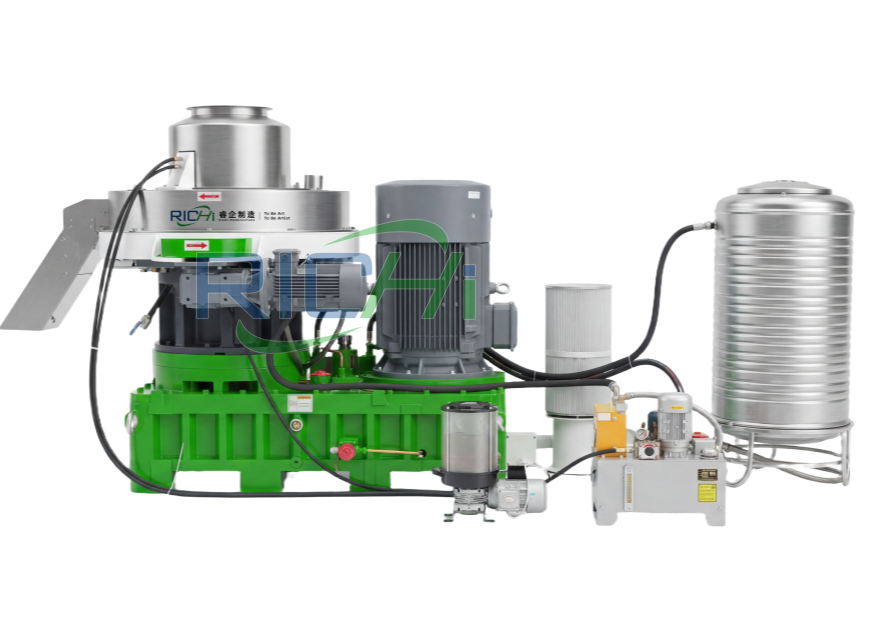
This is one reason the Vertical Biomass Granulator has become increasingly popular among biomass producers worldwide.
Its unique structural design addresses several challenges that have historically limited pellet production efficiency.
Why Equipment Design Matters
Pellet production appears simple from the outside.
Raw materials enter a machine and emerge as dense fuel pellets.
However, significant mechanical forces occur during this process.
The machine must:
- Compress biomass effectively
- Maintain consistent feeding
- Minimize energy loss
- Resist wear
- Operate continuously
Even small design improvements can significantly influence profitability.
Gravity-Assisted Feeding: A Major Advantage
One of the defining characteristics of vertical equipment is gravity-assisted material movement.
Unlike certain traditional systems that rely heavily on forced feeding mechanisms, vertical structures allow raw materials to move naturally into the pelleting chamber.
Benefits include:
- More stable feeding
- Reduced material accumulation
- Lower blockage risk
- Improved productivity
These advantages become especially important when processing lightweight agricultural residues.
Managing Difficult Biomass Materials
Some biomass materials are naturally easy to pelletize.
Others create challenges due to:
- Low density
- High fiber content
- Irregular particle shapes
- Poor flowability
Examples include:
- Straw
- Bamboo fiber
- Palm residues
- Sunflower shells
- Corn stalks
Many producers select a 5 tph sunflower shell pellet mill because it provides sufficient capacity while maintaining stable operation across varying feedstock conditions.
Wear Resistance and Equipment Lifespan
Pellet production involves substantial friction.
Consequently, wear resistance is critical.
Modern pellet equipment incorporates:
High-Strength Alloy Components
Improving durability.
Optimized Roller Designs
Reducing stress concentrations.
Enhanced Die Materials
Extending service life.
Precision Manufacturing
Improving operational stability.
Longer component life directly reduces maintenance costs and downtime.
Energy Efficiency Is Becoming Increasingly Important
Electricity represents a major operating expense for pellet manufacturers.
As energy prices rise, efficient equipment becomes more valuable.
Engineering improvements contributing to energy savings include:
- Optimized transmission systems
- Reduced friction losses
- Improved compression efficiency
- Advanced motor technologies
These factors collectively improve production economics.
Why Automation Continues to Expand
Modern pellet facilities increasingly rely on automated systems.
Automation offers:
- Reduced labor requirements
- Consistent product quality
- Improved safety
- Better process control
Smart systems can monitor:
- Motor loads
- Material flow rates
- Pellet temperatures
- Production output
Real-time data enables operators to optimize performance continuously.
Designing for Maintenance Accessibility
Maintenance remains an unavoidable aspect of industrial production.
Well-designed equipment minimizes downtime by providing:
- Easy component access
- Faster replacement procedures
- Simplified inspections
- Reduced maintenance complexity
Manufacturers increasingly prioritize maintainability during equipment development.
The Role of Complete Production Systems
High-quality pellets require more than a pellet machine.
A modern pellet press typically operates alongside:
- Hammer mills
- Dryers
- Conveyors
- Coolers
- Screens
- Packaging equipment
Each component contributes to overall production performance.
Optimizing the entire system generally produces greater benefits than upgrading a single machine.
Industry Knowledge Supports Better Decisions
Successful biomass producers continuously learn from industry developments.
Many professionals go to website resources that publish technical articles, market research, and project case studies.
Others regularly check my source references to compare technologies and evaluate performance data.
Staying informed helps manufacturers adapt to changing market conditions.
Conclusion
Engineering excellence plays a critical role in biomass pellet production success.
From gravity-assisted feeding to advanced wear-resistant components, modern equipment designs continue improving productivity, efficiency, and reliability.
The Vertical Biomass Granulator demonstrates how innovative engineering can help manufacturers process challenging biomass materials while maintaining consistent pellet quality and operational performance.
Related Post:https://pelletizerequipment.com/vertical-ring-die-pellet-machine/


