


Animal feed pellet quality is one of the most important factors affecting livestock growth, feed utilization efficiency, and farm profitability. High-quality feed pellets provide animals with balanced nutrition, improve feed intake, reduce waste, and support better production performance. Whether producing feed for poultry, cattle, sheep, goats, pigs, or other livestock, maintaining consistent pellet quality is essential for successful animal production.
With the development of modern livestock farming, more farmers and feed manufacturers are choosing pellet feed instead of traditional powder feed. Pelletizing technology can combine different raw materials into compact and uniform feed products that are easier to store, transport, and consume. However, producing high-quality pellets requires careful control of raw materials, production processes, equipment performance, and quality management.
Many factors influence animal feed pellet quality, including ingredient selection, particle size, moisture content, conditioning conditions, pellet machine performance, cooling efficiency, and storage management. By optimizing these factors, feed producers can manufacture pellets with better durability, lower powder content, improved nutritional consistency, and higher feeding value.
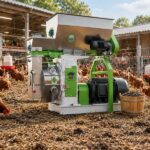
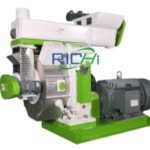
Modern feed production equipment plays a key role in improving pellet quality. For example, a poultry feed pellet machine is designed to process poultry feed formulas efficiently and produce uniform pellets suitable for different chicken growth stages. Proper equipment selection and operation can significantly improve production stability and final product quality.
This article explains effective methods to improve animal feed pellet quality and how modern feed production technologies help manufacturers achieve better results.
1. Select High-Quality Feed Raw Materials
The quality of animal feed pellets begins with the quality of raw materials. Even the most advanced pelletizing equipment cannot produce excellent feed if the ingredients are poor.
Common raw materials used in animal feed production include:
- Corn
- Wheat
- Barley
- Soybean meal
- Fish meal
- Rice bran
- Wheat bran
- Alfalfa
- Grass meal
- Mineral additives
- Vitamin supplements
High-quality raw materials should have:
- Stable nutritional value
- Proper moisture content
- Low contamination risk
- Good storage condition
Poor-quality ingredients may cause:
- Weak pellets
- Uneven nutrition
- Increased dust
- Reduced animal performance
Before entering production, raw materials should be inspected and tested to ensure they meet feed manufacturing requirements.
For example, grains with excessive moisture may reduce pellet durability, while contaminated materials may affect animal health.
Therefore, establishing a reliable raw material supply system is the first step toward producing high-quality feed pellets.
2. Optimize Feed Formula Design
A balanced feed formula is essential for producing pellets with good nutritional value and physical characteristics.
Different livestock species require different formulas.
For example:
Poultry Feed Formula
Poultry feed usually contains:
- Corn for energy
- Soybean meal for protein
- Wheat bran for fiber
- Minerals and vitamins
Cattle Feed Formula
Cattle feed requires:
- High fiber ingredients
- Energy sources
- Protein supplements
Goat Feed Formula
Goats need:
- Forage materials
- Protein sources
- Mineral supplements
A scientific formula should consider:
- Animal species
- Growth stage
- Production purpose
- Nutritional requirements
A well-balanced formula not only improves animal performance but also affects pellet quality.
Some ingredients naturally improve pellet binding, while others may reduce pellet strength. Feed manufacturers should adjust formulas according to ingredient characteristics.
3. Control Particle Size Through Proper Grinding
Grinding is an important step before pellet production. The particle size of feed ingredients directly affects pellet formation and durability.
Proper grinding provides several benefits:
Better Mixing
Smaller particles mix more evenly with other ingredients.
Stronger Pellets
Fine particles have more contact points, improving binding during compression.
Better Digestibility
Animals can digest smaller particles more efficiently.
However, excessively fine grinding may create problems:
- Increased energy consumption
- Reduced feed structure
- Poor airflow during processing
The ideal particle size depends on:
- Animal type
- Feed formula
- Pellet diameter
- Equipment design
A suitable crushing process creates a balanced particle structure that improves pellet quality.
4. Maintain Proper Moisture Content
Moisture content is one of the most important factors affecting pellet quality.
During pellet production, moisture helps feed particles bind together. However, both insufficient and excessive moisture can create problems.
Low Moisture Problems
If feed materials are too dry:
- Pellets may break easily
- More powder may be produced
- Pellet formation becomes difficult
Excessive Moisture Problems
If materials contain too much moisture:
- Pellets become soft
- Production efficiency decreases
- Storage problems may occur
Maintaining proper moisture levels improves:
- Pellet strength
- Durability
- Production stability
Moisture should be carefully controlled during raw material preparation and conditioning.
5. Improve Conditioning Performance
Conditioning is a critical process before pelletizing. During conditioning, steam and moisture are added to the feed mixture to improve pellet formation.
Effective conditioning provides several advantages:
- Softens feed particles
- Improves binding ability
- Enhances pellet durability
- Reduces energy consumption
Important conditioning factors include:
Steam Quality
High-quality steam improves moisture distribution.
Conditioning Time
Adequate conditioning allows ingredients to absorb moisture properly.
Temperature Control
Suitable temperature improves starch gelatinization and pellet strength.
Poor conditioning may result in:
- Weak pellets
- High powder content
- Uneven quality
Therefore, optimizing conditioning parameters is essential for producing strong and durable pellets.
6. Choose Suitable Pelletizing Equipment
The pellet machine is the core equipment in feed pellet production. Its performance directly affects pellet appearance, durability, and production capacity.
A reliable pellet machine should provide:
- Stable operation
- Uniform pellet size
- High compression efficiency
- Long service life
For poultry feed production, selecting a suitable poultry feed pellet machine is especially important because poultry requires consistent pellet size and quality for efficient feeding.
https://richipelletizer.com/chicken-feed-pellet-machine-for-sale
When choosing pelletizing equipment, manufacturers should consider:
Production Capacity
The machine should match the required output.
Die Design
The die determines pellet diameter and compression ratio.
Roller Performance
High-quality rollers provide stable pressure.
Energy Efficiency
Efficient equipment reduces operating costs.
The right pellet machine helps maintain consistent product quality and reduces production problems.
7. Select Appropriate Die and Roller Settings
The die and roller system plays a major role in pellet formation.
Important factors include:
Die Compression Ratio
A suitable compression ratio ensures strong pellet formation.
If compression is too low:
- Pellets may be fragile
If compression is too high:
- Energy consumption increases
- Production efficiency decreases
Roller Adjustment
Proper roller distance improves:
- Material compression
- Pellet consistency
- Equipment stability
Regular inspection and adjustment of die and rollers help maintain high-quality pellet production.
8. Improve Cooling Efficiency
Fresh pellets leaving the pellet machine are usually hot and contain higher moisture levels. Proper cooling is necessary to stabilize pellet structure.
An effective cooling process:
- Reduces pellet temperature
- Removes excess moisture
- Improves hardness
- Prevents deformation
Poor cooling may cause:
- Broken pellets
- Mold growth
- Reduced storage life
Cooling equipment should be properly matched with production capacity to ensure all pellets receive sufficient cooling.
9. Strengthen Screening and Quality Control
Screening is an important step for improving finished pellet quality.
After cooling, pellets should be screened to remove:
- Powder
- Broken pellets
- Oversized particles
High-quality pellets should have:
- Uniform size
- Low dust content
- Strong durability
- Stable moisture levels
Quality control tests should include:
Pellet Durability Testing
Measures resistance to breakage during transportation.
Moisture Testing
Ensures safe storage.
Density Testing
Evaluates pellet compactness.
Nutritional Testing
Confirms feed formula accuracy.
A strict quality management system helps maintain consistent feed performance.
10. Reduce Pellet Breakage During Handling
Even high-quality pellets can become damaged during transportation and storage if handled improperly.
To reduce breakage:
- Use suitable conveying equipment
- Avoid excessive mechanical impact
- Maintain proper packaging methods
- Control storage conditions
Broken pellets increase feed waste and reduce product value.
Careful handling helps maintain pellet quality from production to final use.
11. Improve Storage Conditions
Proper storage is essential for maintaining feed pellet quality.
Feed pellets should be stored in:
- Dry warehouses
- Well-ventilated areas
- Clean environments
Poor storage conditions may cause:
- Moisture absorption
- Mold growth
- Nutrient loss
- Reduced pellet strength
Storage areas should protect pellets from:
- Rain
- High humidity
- Direct sunlight
- Pests
Good storage management extends feed shelf life and maintains nutritional quality.
12. Use Automation Technology
Modern automation systems can significantly improve feed pellet quality.
Automated production systems help control:
- Ingredient measurement
- Mixing accuracy
- Conditioning parameters
- Pellet machine operation
- Quality monitoring
Benefits include:
Higher Production Accuracy
Automatic systems reduce human errors.
Stable Product Quality
Production parameters remain consistent.
Lower Labor Requirements
Automation improves operational efficiency.
For large feed factories, intelligent control systems are becoming increasingly important for maintaining high-quality production.
13. Maintain Feed Production Equipment Regularly
Equipment condition directly affects pellet quality.
Regular maintenance should include:
- Checking rollers and dies
- Cleaning production equipment
- Replacing worn components
- Inspecting motors and electrical systems
Poorly maintained equipment may cause:
- Uneven pellets
- Lower output
- Increased energy consumption
For example, regular maintenance of a poultry feed pellet machine ensures stable compression performance and consistent pellet production.
Preventive maintenance reduces downtime and improves production reliability.
14. Adjust Pellet Size According to Animal Requirements
Different animals require different pellet sizes.
For example:
Chickens
Usually require smaller pellets suitable for easy consumption.
Cattle
May use larger pellets because of their feeding behavior.
Goats and Sheep
Require pellets that balance fiber intake and digestibility.
Choosing the correct pellet size improves:
- Feed intake
- Digestibility
- Animal performance
Feed manufacturers should adjust die specifications according to customer requirements.
15. Improve Production Management and Operator Training
Skilled operators are important for maintaining pellet quality.
Operators should understand:
- Equipment operation
- Production parameters
- Quality standards
- Troubleshooting methods
Proper training helps prevent:
- Incorrect machine adjustment
- Production instability
- Quality problems
A combination of advanced equipment and skilled operation creates the best production results.
16. Future Development of High-Quality Feed Pellet Production
The animal feed industry is moving toward higher efficiency, automation, and precision nutrition.
Future trends include:
- Smart feed production systems
- Customized animal nutrition solutions
- Energy-saving pellet machines
- Improved raw material utilization
- Digital quality monitoring
Advanced technologies will continue helping feed manufacturers produce better-quality pellets at lower costs.
Equipment innovation, including more efficient poultry feed pellet machines, will provide stronger support for modern feed production.
Conclusion
Improving animal feed pellet quality requires attention to every stage of production, from raw material selection and formula design to grinding, conditioning, pelletizing, cooling, and storage. Each factor influences pellet durability, nutritional value, and feeding performance.
High-quality feed pellets help livestock receive balanced nutrition, improve feed conversion efficiency, reduce waste, and increase farm profitability. Modern production equipment plays a critical role in achieving these goals.
A reliable poultry feed pellet machine allows manufacturers to produce uniform and durable poultry feed pellets while improving production efficiency and consistency. By combining scientific production methods, advanced equipment, and strict quality management, feed producers can create high-value products that support healthier animals and more sustainable livestock farming.