


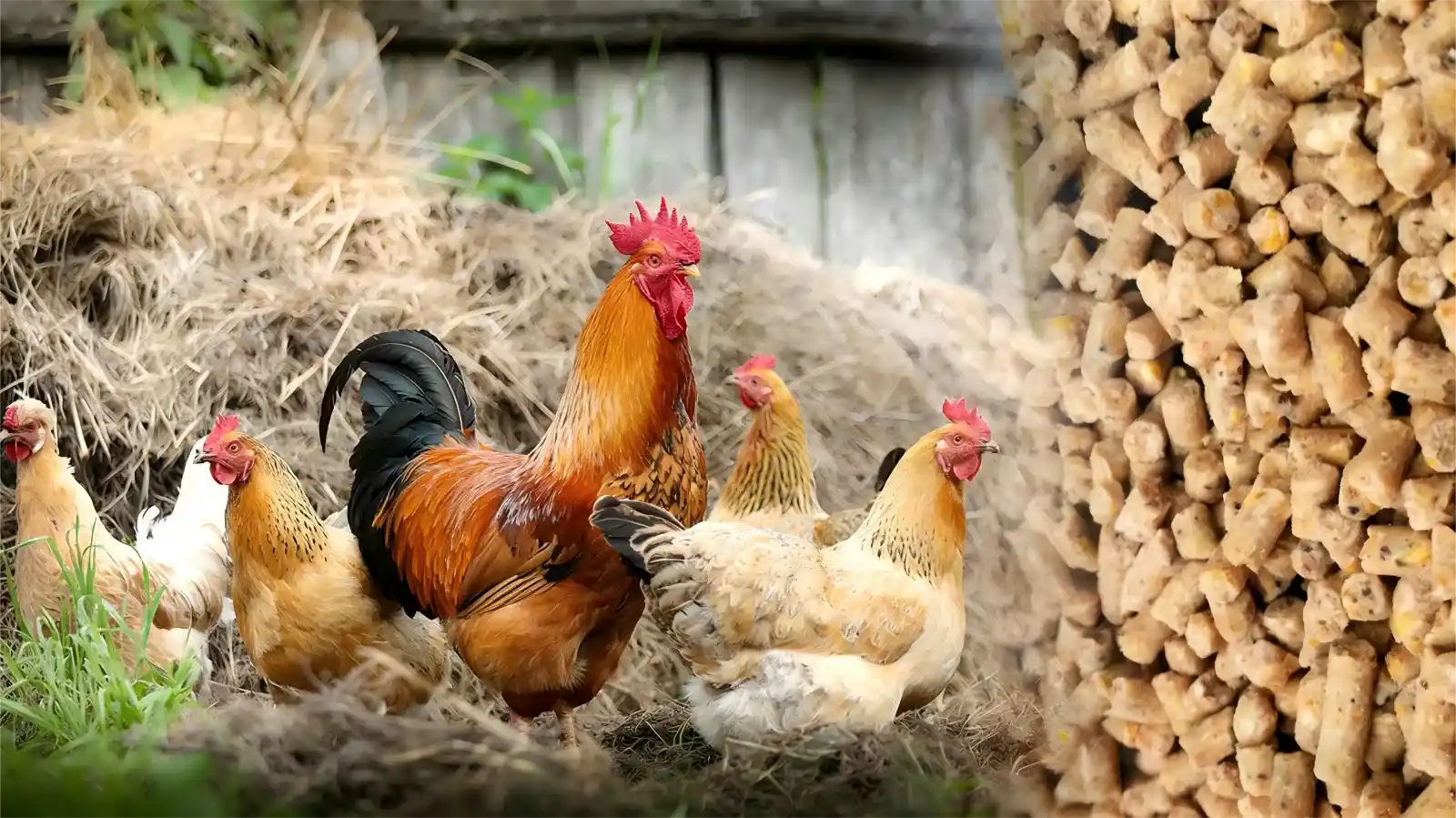
High-quality chicken feed is one of the foundations of efficient poultry production. Chickens need feed that provides appropriate levels of energy, protein, amino acids, vitamins, minerals, and other nutrients. However, nutritional formulation is only one part of feed quality. The way ingredients are processed can also have a major influence on the physical characteristics, nutritional consistency, storage stability, and feeding performance of the final product.
Modern feed processing technology transforms individual agricultural ingredients into a more uniform and manageable feed product. Through cleaning, grinding, batching, mixing, conditioning, pelletizing, cooling, screening, and packaging, a feed factory can improve the consistency and physical quality of chicken feed.
A chicken feed pellet mill is an important piece of equipment in this process because it converts prepared feed mixtures into compact pellets. However, the pellet mill works as part of a complete processing system. The quality of pellets depends on the condition of the raw materials before pelletizing and on cooling, screening, conveying, and storage after pellet formation.
This article explains how different feed processing stages can improve chicken feed quality and why an integrated production process is important for modern poultry feed manufacturing.
1. Why Feed Processing Matters
Raw materials are rarely ready to be used directly as finished chicken feed.
Corn may have a relatively large particle size. Soybean meal may have different flow characteristics. Bran contains more fiber, while vitamins and minerals are often used in very small quantities.
If these ingredients are simply mixed together without proper processing, the final feed may have problems such as:
- Uneven particle size
- Poor mixing uniformity
- Ingredient separation
- Excessive dust
- Poor pellet formation
- High fines content
- Inconsistent nutrient distribution
- Difficult handling
- Poor storage stability
Feed processing helps solve these problems by changing the physical characteristics of the ingredients and creating a more uniform final product.
The objective is not simply to process the materials more aggressively. Instead, each process should be selected and controlled according to the feed formula and final product requirements.
2. Cleaning Improves Feed Safety and Equipment Protection
The first important processing step is raw material cleaning.
Agricultural materials can contain unwanted substances such as:
- Stones
- Sand
- Metal particles
- Dust
- Plant residues
- Foreign materials
If these materials enter the production line, they can affect feed quality and damage processing equipment.
A cleaning section may include:
- Vibrating screen
- Rotary screen
- Magnetic separator
- Destoner
- Dust collection system
The screen removes larger unwanted particles, while magnetic equipment can remove ferrous metal.
Effective cleaning improves the quality of the raw materials entering the grinding and mixing sections.
It also protects expensive downstream equipment such as hammer mills and pellet mills.
3. Grinding Improves Particle Uniformity
Grinding is one of the most important stages in chicken feed processing.
Grains and other ingredients often need to be reduced to a suitable particle size before mixing and pelletizing.
A hammer mill is commonly used for this purpose.
Proper grinding can improve:
- Particle-size uniformity
- Mixing efficiency
- Pellet formation
- Pellet durability
- Feed texture
- Processing consistency
When particle sizes are very different, heavy particles may separate from lighter materials during handling.
Grinding can reduce these differences and create a more suitable material for mixing.
However, excessively fine grinding is not always better.
Very fine particles may increase:
- Energy consumption
- Dust generation
- Processing costs
- Heat generation
Therefore, the grinding system should be adjusted according to the poultry type, formula, and final product.
4. Better Grinding Can Improve Pellet Quality
Particle size also affects pellet formation.
A more uniform feed mixture can pass through the die more consistently during pelletizing.
Fine particles can fill spaces between larger particles and contribute to a more compact pellet structure.
However, the ideal grinding fineness depends on the formula.
For example, a feed formula containing mainly corn and soybean meal may require a different grinding approach from a formula containing high levels of fibrous materials.
Therefore, grinding should be considered together with pellet diameter, die compression ratio, conditioning, and feed formulation.
5. Accurate Batching Improves Nutritional Consistency
After grinding, ingredients need to be weighed according to the feed formula.
Batching is essential because each ingredient contributes differently to the nutritional composition of the feed.
A modern feed factory may use automatic batching systems to measure:
- Corn
- Wheat
- Soybean meal
- Bran
- Protein ingredients
- Minerals
- Vitamins
- Amino acids
- Other additives
Accurate batching reduces the risk of formula deviations.
This is particularly important for ingredients used in small quantities.
Manual weighing can be suitable for small feed operations, but commercial factories often use automated weighing systems for better accuracy and production efficiency.
6. Mixing Creates a More Uniform Feed
Once the ingredients have been accurately weighed, they need to be mixed.
Mixing distributes the ingredients throughout the batch.
A properly designed feed mixer can combine materials with different particle sizes, densities, and physical characteristics.
Common industrial mixers include:
- Paddle mixers
- Ribbon mixers
- Horizontal mixers
Mixing performance depends on:
- Mixer design
- Batch size
- Filling ratio
- Mixing time
- Ingredient characteristics
- Moisture
- Liquid addition
A well-mixed feed helps ensure that nutrients are distributed more consistently.
This is particularly important for vitamins, minerals, amino acids, and other micro-ingredients.
7. Feed Processing Reduces Ingredient Separation
Ingredient separation can occur when materials have different particle sizes, densities, and shapes.
For example, large particles may settle while fine particles remain suspended.
This can result in nutritional differences between different portions of the same batch.
Grinding and mixing help reduce this problem.
Pelletizing provides another important solution because it converts the mixed ingredients into a more uniform physical form.
Once the ingredients are compressed into pellets, they are less likely to separate during normal handling and transportation.
8. Conditioning Improves Pellet Formation
Conditioning is a key processing stage before pelletizing.
During conditioning, steam is added to the feed mixture.
This increases moisture and temperature and changes the physical properties of the material.
Proper conditioning can improve:
- Binding
- Pellet formation
- Pellet durability
- Production stability
- Pellet mill throughput
Conditioning also helps the material become more suitable for compression.
However, conditioning parameters should be carefully controlled.
Important factors include:
- Steam quality
- Temperature
- Moisture
- Conditioning time
- Feed flow
- Formula composition
Different feed formulas may require different conditioning conditions.
9. Heat and Moisture Need to Be Controlled
Heat and moisture can both improve processing when properly controlled.
However, excessive heat or moisture can create problems.
Too much moisture may make pellets difficult to cool and store.
Excessive heat may affect certain heat-sensitive nutrients or additives.
Insufficient moisture may result in weak pellet formation and increased fines.
Therefore, feed processing should aim for a controlled balance.
The conditioning system should be designed according to the raw material characteristics and final feed specifications.
10. Pelletizing Improves Feed Handling
Pelletizing changes loose feed ingredients into compact particles.
This provides several practical advantages.
Pellets are generally easier to:
- Transport
- Store
- Package
- Handle
- Measure
- Feed
Pelletizing can also reduce dust compared with some mash-feed products.
The process compresses the prepared feed mixture through die holes to form pellets of a selected diameter.
11. The Role of the Chicken Feed Pellet Mill
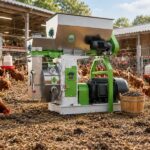
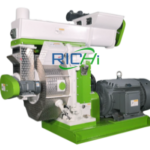
The chicken feed pellet mill is the central machine in the pelletizing stage.
It receives the prepared feed mixture and compresses it through a die.
The pellet mill’s performance depends on many factors, including:
- Formula composition
- Grinding fineness
- Moisture
- Conditioning
- Feed rate
- Die specifications
- Die compression ratio
- Roller condition
- Operating parameters
Therefore, selecting a pellet mill should not be based only on its nominal capacity.
The machine should be matched to the specific chicken feed products and the complete production process.
(Learn more:https://pelletisingmachine.com/chicken-feed-pellet-making-machine)
12. Pellet Size Can Be Controlled
One important advantage of pelletizing is that pellet size can be controlled.
Different chicken feed products may require different pellet diameters.
For example, young chicks generally need smaller feed particles, while older birds may consume larger pellets.
The pellet mill can use different dies to produce different pellet diameters.
This allows a feed factory to manufacture products for different growth stages.
The die should be selected according to the desired diameter, formula characteristics, production capacity, and pellet quality requirements.
13. Pellet Durability Can Be Improved Through Processing
Pellet durability is an important aspect of physical feed quality.
Weak pellets can break during:
- Cooling
- Screening
- Conveying
- Packaging
- Transportation
- Storage
This increases fines and may reduce the usable portion of the feed.
Proper feed processing can improve pellet durability.
The major factors include:
- Suitable particle size
- Uniform mixing
- Appropriate moisture
- Proper conditioning
- Correct die selection
- Roller adjustment
- Controlled cooling
This shows why pellet quality cannot be attributed to the pellet mill alone.
14. Cooling Stabilizes Finished Pellets
Fresh pellets leaving the pellet mill are hot and contain elevated moisture.
They should be cooled before screening and packaging.
A pellet cooler reduces temperature and helps stabilize moisture.
Counterflow cooling systems are widely used in commercial feed plants.
Effective cooling can improve:
- Storage stability
- Pellet structure
- Packaging performance
- Moisture control
If pellets are packaged while they are still too hot, condensation may occur inside the bags.
Therefore, cooling is an important part of the complete pellet production process.
15. Screening Improves Physical Uniformity
After cooling, pellets are normally screened.
The screening machine separates qualified pellets from fines and oversized particles.
This improves the uniformity of the final product.
Screening can separate:
- Qualified pellets
- Fine powder
- Broken pellets
- Oversized particles
Fines can often be returned to the production process.
An efficient screening system therefore helps reduce product loss and improve finished-feed appearance.
16. Feed Processing Can Reduce Dust
Dust is a common problem in feed manufacturing.
Grinding generates fine particles, while conveying, mixing, screening, and packaging can also create dust.
Pelletizing can help reduce the amount of loose powder in the final product.
A well-formed pellet is generally easier to handle than a loose powder mixture.
However, excessive fines can still occur if pellet quality is poor.
Dust collectors should also be installed at major dust-generating points.
17. Processing Improves Feed Flowability
Pellets generally have more consistent physical characteristics than many loose raw material mixtures.
This can improve the flow of feed through:
- Conveyors
- Hoppers
- Storage bins
- Packing machines
- Feeding systems
Good flowability is particularly useful for commercial feed factories where large quantities of feed must be transported and packaged.
18. Feed Processing Can Improve Storage and Transportation
Loose feed ingredients may separate during transportation.
Pellets are more compact and easier to handle.
Properly processed pellets can reduce the risk of excessive dust and ingredient segregation.
However, storage quality still depends on moisture, temperature, packaging, and warehouse conditions.
Finished feed should be cooled properly before storage and protected from moisture.
19. Post-Pelletizing Coating
Some nutrients and additives may be better applied after pelletizing.
For example, oil or certain heat-sensitive additives can be sprayed onto finished pellets.
A coating system can help distribute these ingredients on the surface.
Post-pelletizing application may be useful when an ingredient needs to minimize exposure to the heat and moisture of conditioning.
The appropriate approach depends on the feed formula and characteristics of the additive.
20. Processing Can Improve Formula Consistency
A well-designed processing system helps ensure that each production batch follows the intended formula.
Automatic batching, accurate weighing, uniform mixing, and controlled pelletizing all contribute to consistency.
This is especially important for commercial poultry feed manufacturers producing large quantities.
Consistency means that customers can expect similar physical and nutritional characteristics from one production batch to another.
21. Automation Improves Process Control
Automation is increasingly used in modern poultry feed factories.
A centralized control system can manage:
- Raw material feeding
- Batching
- Mixing
- Conditioning
- Pelletizing
- Cooling
- Screening
- Conveying
- Packing
Automation can reduce manual errors and provide better control of production parameters.
For large factories, automated formula management can also make it easier to produce different chicken feed products.
However, automation should be designed around the actual production requirements.
22. Feed Processing Improves Production Efficiency
Efficient processing can increase the overall productivity of a feed factory.
When equipment capacities are properly matched, materials can move smoothly through the plant.
For example:
Grinding → Batching → Mixing → Conditioning → Pelletizing → Cooling → Screening → Packing
Each section should have enough capacity to support the next stage.
If the grinding system is too small, the pellet mill may have insufficient material.
If the cooler is too small, the pellet mill may need to reduce its output.
Therefore, the complete process should be engineered as one system.
23. Proper Equipment Selection Is Essential
Equipment selection affects both feed quality and production efficiency.
A feed factory may require:
- Raw material cleaning equipment
- Hammer mill
- Batching system
- Feed mixer
- Conditioner
- Chicken feed pellet mill
- Pellet cooler
- Screening machine
- Conveyors
- Bucket elevators
- Packing machine
- Dust collector
- Electrical control system
Each machine should be selected according to the actual production requirements.
The capacity of the equipment should also be properly matched.
24. What to Consider When Selecting a Chicken Feed Pellet Mill
When selecting a pellet mill, buyers should consider:
Production capacity
The machine should meet the desired output without excessive overload.
Pellet size
The machine should support the pellet diameters required for different poultry products.
Formula characteristics
Different formulas may have different pelletizing characteristics.
Die options
The availability of different dies can improve product flexibility.
Energy consumption
Motor power and actual operating efficiency affect long-term costs.
Wear parts
Dies, rollers, bearings, and other components require regular inspection and replacement.
Maintenance
The machine should be easy to inspect, clean, lubricate, and maintain.
Integration
The pellet mill should be compatible with the conditioner, feeder, cooler, screening machine, and control system.
25. Storage Conditions Still Matter
Feed processing can significantly improve feed quality, but good processing cannot eliminate the need for proper storage.
Finished pellets should be stored in a:
- Clean environment
- Dry warehouse
- Well-ventilated area
- Pest-controlled facility
Excessive moisture can reduce storage stability.
High temperature can accelerate deterioration of some ingredients.
The packaging should also provide suitable protection.
26. Quality Control Should Cover the Entire Process
Feed quality should be monitored at multiple stages.
Raw material stage
Check moisture, freshness, contamination, and nutritional characteristics.
Grinding stage
Check particle size.
Batching stage
Check ingredient weights.
Mixing stage
Check mixing uniformity.
Conditioning stage
Check temperature and moisture.
Pelletizing stage
Check pellet diameter, durability, appearance, and production stability.
Cooling stage
Check pellet temperature and moisture.
Screening stage
Check fines content and size distribution.
Storage stage
Check warehouse conditions and finished-feed stability.
This process-based quality-control approach is more effective than checking only the finished product.
27. Common Processing Problems
Several processing problems can reduce chicken feed quality.
Weak Pellets
Possible causes include:
- Poor grinding
- Insufficient conditioning
- Incorrect moisture
- Unsuitable die
- Poor formula characteristics
Excessive Fines
Possible causes include:
- Poor pellet durability
- Incorrect die compression
- Inadequate cooling
- Excessive conveying impact
Uneven Feed
Possible causes include:
- Inaccurate batching
- Poor mixing
- Inconsistent particle size
- Uneven liquid addition
High Moisture
Possible causes include:
- Excessive steam
- Poor cooling
- Improper storage
The solution should be based on the actual cause.
28. Feed Processing and Different Chicken Feed Products
Processing requirements may vary according to the product.
Broiler Feed
Broiler feed is commonly produced in different stages, such as starter, grower, and finisher.
Pellet size and nutritional composition can change as birds grow.
Layer Feed
Layer feed must meet the nutritional requirements associated with egg production.
The physical form can be mash, crumble, or pellets depending on the feeding program.
Chick Feed
Young chicks generally require smaller feed particles.
The processing system should therefore be capable of producing appropriately sized products.
A flexible production line makes it easier to manufacture different poultry feed products.
29. Why a Complete Processing System Is Better Than a Single Machine
One of the most important principles in poultry feed manufacturing is that feed quality is determined by the entire process.
A high-quality pellet mill cannot compensate for:
- Poor raw materials
- Incorrect formula
- Uneven batching
- Poor grinding
- Incomplete mixing
- Improper conditioning
- Poor cooling
- Excessive conveying damage
- Bad storage
Therefore, investors should consider the complete production line when planning a poultry feed factory.
The equipment should be designed to work together.
30. How RICHI Can Support Chicken Feed Processing Projects
RICHI Manufacture provides complete feed processing solutions rather than focusing only on individual machines.
A typical poultry feed production line can include:
Raw Material Receiving → Cleaning → Grinding → Batching → Mixing → Conditioning → Pelletizing → Cooling → Screening → Packing
Supporting equipment can include storage bins, conveyors, elevators, dust collectors, liquid addition systems, and centralized electrical controls.
RICHI can provide support covering:
- Production process design
- Equipment selection
- Factory layout
- Equipment manufacturing
- Complete production line integration
- Transportation and customs clearance
- Installation and commissioning
- Operator training
- Long-term after-sales support
The process can be customized according to raw materials, feed formulas, capacity, pellet size, factory space, and automation requirements.
Frequently Asked Questions
How does feed processing improve chicken feed quality?
Feed processing improves physical uniformity, ingredient distribution, pellet formation, durability, handling, and storage characteristics. Processes such as grinding, batching, mixing, conditioning, pelletizing, cooling, and screening work together.
What is the role of a chicken feed pellet mill?
A chicken feed pellet mill compresses prepared feed material through a die to form pellets. Its performance depends on material preparation, moisture, conditioning, die selection, feed rate, and other process parameters.
Can pelletizing improve feed handling?
Yes. Pelletizing converts loose ingredients into compact particles that are generally easier to transport, store, package, and handle.
Why is cooling necessary after pelletizing?
Fresh pellets leave the pellet mill at elevated temperatures. Cooling reduces temperature and stabilizes moisture before screening and storage.
Does finer grinding always produce better chicken feed?
Not necessarily. Excessively fine grinding can increase energy consumption and dust. The appropriate particle size depends on the formula, poultry type, pellet size, and processing system.
What should I consider when choosing a chicken feed pellet mill?
Consider production capacity, pellet size, formula characteristics, die options, energy consumption, wear parts, maintenance, and compatibility with the complete production line.
Can the same production line make different poultry feed products?
Yes. With appropriate batching, formula management, die changes, and process adjustments, one production line can often manufacture different poultry feed products.
Conclusion
Feed processing plays a critical role in improving chicken feed quality.
Cleaning removes unwanted materials. Grinding creates a suitable particle size. Accurate batching controls the formula. Mixing distributes ingredients evenly. Conditioning prepares the material for pelletizing. Pelletizing creates compact and manageable feed particles. Cooling stabilizes the pellets, while screening improves size uniformity and reduces fines.
The chicken feed pellet mill is an important part of this process, but it should always be considered within the complete production system.
The quality of the final feed depends on how well all processing stages work together. Raw material quality, formula design, grinding, batching, mixing, conditioning, pelletizing, cooling, screening, conveying, packaging, and storage all contribute to the final result.
For feed manufacturers planning a new poultry feed factory or upgrading an existing facility, the most effective approach is to optimize the complete process rather than focus on one machine.
With appropriate processing technology, well-matched equipment, accurate process control, trained operators, and regular quality testing, a chicken feed production line can produce more consistent, durable, and stable feed while improving overall manufacturing efficiency.