


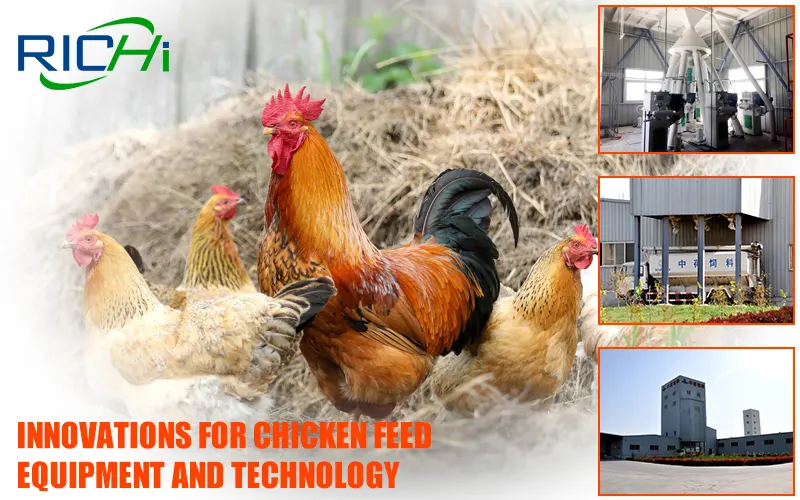
Why Does Poultry Feed Plant Investment Vary So Much?
When people begin researching a poultry feed manufacturing project, one of the first questions is often about cost. However, there is no single figure that applies to every poultry feed plant.
A small farm-based facility, a medium-sized commercial mill, and a highly automated industrial factory can have completely different investment requirements. Even plants with the same nominal production capacity may require different equipment because their raw materials, product range, automation levels, and site conditions are not identical.
The phrase poultry feed plant price therefore needs to be understood as a combination of several costs rather than the price of one machine.
A complete project may include raw-material receiving, cleaning, grinding, batching, mixing, pelletizing, cooling, screening, conveying, storage, packaging, electrical control, dust collection, and other supporting systems.
The key question is not simply how much a machine costs. A more useful question is: what kind of production system is required to make the desired feed efficiently and consistently?
Understanding the major cost factors can help potential investors prepare a more realistic project budget.
What Is a Poultry Feed Plant?
A poultry feed plant is a facility designed to process different feed ingredients into finished feed for chickens and other poultry.
Depending on the production target, the plant may produce broiler feed, layer feed, chick starter feed, breeder feed, or other specialized formulations.
The basic production process often includes:
Raw-material receiving → cleaning → grinding → batching → mixing → pelleting → cooling → screening → packaging or bulk storage
Not every plant requires every stage.
For example, a small operation using already-ground ingredients may not need a large grinding section. A facility selling bulk feed may not require an extensive bagging system.
This is why the design should be based on actual production requirements instead of starting with a standard equipment list.
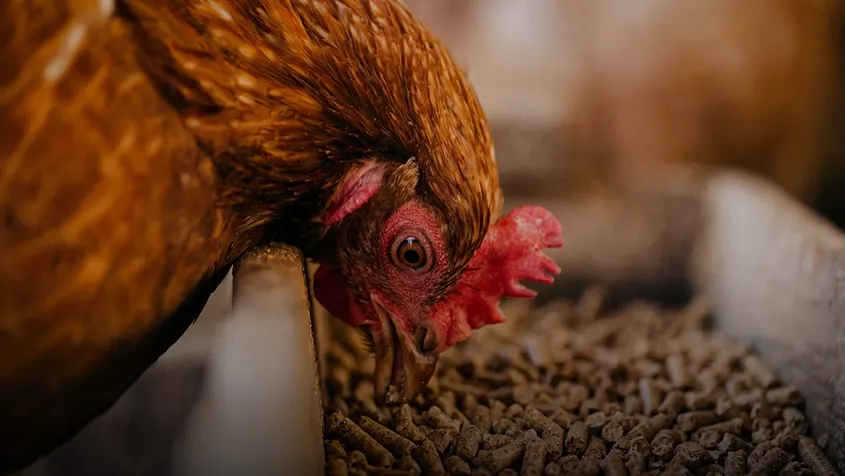
Which Factors Have the Biggest Influence on Project Cost?
Several factors influence the total investment.
The first is production capacity. A plant designed to produce one ton per hour will generally require different equipment from a factory designed for ten or twenty tons per hour.
The second is the type of poultry feed being produced. Some formulations may require additional liquid addition, micro-dosing, or post-pellet coating systems.
The third is automation. Manual and semi-automatic systems may require more labor but less control-system investment, while highly automated plants generally require more electrical and control equipment.
The fourth is raw-material condition. Ingredients with high moisture or large particle sizes may require additional preparation.
The fifth is the site itself. Building construction, electrical infrastructure, storage, roads, and material-handling arrangements can all affect the final project budget.
These variables explain why comparing equipment prices without comparing specifications can sometimes produce misleading conclusions.
How Does Production Capacity Affect Investment?
Capacity is one of the most obvious factors affecting the cost of a feed plant.
A small poultry feed facility may be designed for several hundred kilograms per hour or a few tons per hour. Such a system can be relatively compact and may use simpler conveying and storage arrangements.
A medium-sized commercial plant may operate continuously for several hours each day and require larger hammer mills, mixers, pellet mills, coolers, conveyors, and storage bins.
Large industrial facilities require another level of process integration. Automated batching, centralized control, multiple production lines, large storage systems, and sophisticated material-handling equipment may become necessary.
However, higher capacity does not automatically mean better economics.
If a farm only has enough demand for a small amount of feed, installing a very large production system may create unnecessary idle capacity.
The equipment should therefore be matched to realistic production demand and future expansion plans.
What Raw Materials Are Used in Poultry Feed?
Poultry feed typically contains a combination of energy sources, protein ingredients, minerals, vitamins, and other additives.
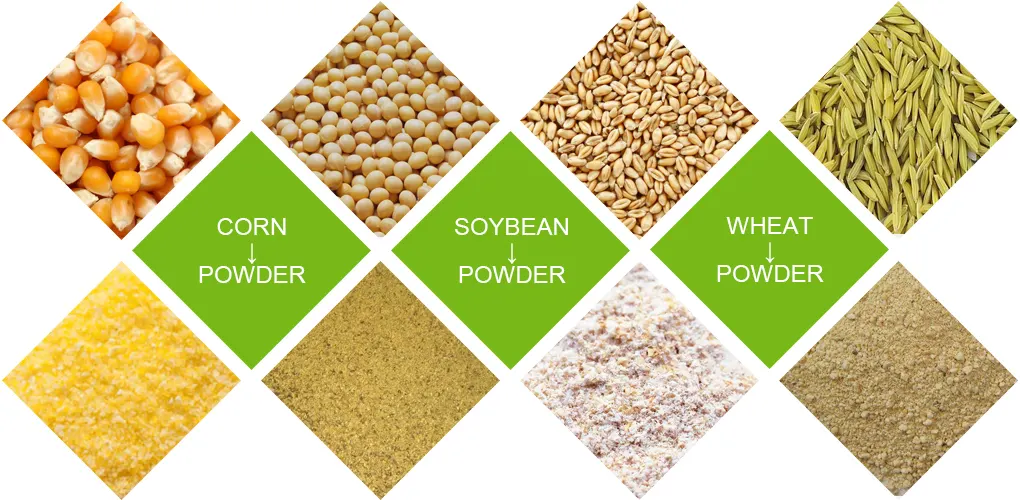
Common ingredients can include corn, wheat, soybean meal, rapeseed meal, rice bran, wheat bran, vegetable oils, limestone, phosphate sources, salt, vitamin-mineral premixes, and other ingredients depending on the formulation.
The exact recipe depends on poultry species, age, production stage, local ingredient availability, and nutritional objectives.
Raw-material quality also influences the processing system.
For example, whole grains normally require grinding before batching and mixing. Certain liquid ingredients may require dedicated storage tanks and dosing equipment.
Ingredients supplied in different forms may also require separate conveying arrangements.
Consequently, raw-material characteristics should be evaluated before finalizing the plant design.
Does the Feed Formula Affect Equipment Selection?
Yes.
The formulation determines how different ingredients are handled and processed.
If a formula contains mostly dry materials, a conventional dry mixing and pelleting process may be sufficient.
If the formula requires multiple micro-ingredients, precise dosing equipment can become important. Very small quantities need to be measured accurately to maintain consistency between batches.
Liquid ingredients may require pumps, tanks, pipelines, and spraying systems.
The formulation can also affect pellet quality. Different levels of starch, fiber, protein, and fat influence the behavior of the feed during pelleting.
For this reason, nutrition and engineering should be considered together when planning a poultry feed facility.
Is a Hammer Mill Necessary in Every Poultry Feed Plant?
Not always.
A hammer mill is commonly used to reduce the particle size of grains and other ingredients. Smaller and more uniform particles can improve mixing consistency and pellet formation.
However, the need for grinding depends on the condition of incoming materials.
If ingredients are already supplied in a suitable particle size, extensive grinding may not be necessary.
The selection of the grinder also depends on capacity. A small feed mill may require a relatively compact machine, while a large factory may need multiple grinding units or an automated grinding system.
Grinding energy should also be considered. Producing unnecessarily fine particles increases power consumption without necessarily improving feed quality.
The target particle size should therefore be established according to the feed formulation and animal requirements.
Why Is Mixing Important?
Mixing is one of the most important stages in feed manufacturing because every pellet should ideally contain a consistent distribution of nutrients.
A typical batch may contain ingredients present in very different proportions. Major ingredients can account for most of the mixture, while vitamins, minerals, and additives may be present in very small quantities.
A properly designed mixer should achieve sufficient uniformity within a reasonable mixing time.
Poor mixing can result in nutritional variation between batches or even between portions of the same batch.
The mixer type and size should therefore be selected according to batch capacity, formulation characteristics, and required mixing performance.
The design of the batching system is closely connected to this stage because accurate weighing provides the foundation for consistent mixing.
Does Poultry Feed Have to Be Pelleted?
No. Poultry feed can be produced in mash, crumble, or pellet form.
Mash feed consists of mixed ingredients without pelletizing.
Pelleted feed is compressed into a defined shape, which can improve handling characteristics and reduce ingredient separation during transportation.
Crumble feed is generally produced by making pellets and then breaking them into smaller pieces. It is commonly used for younger poultry because the smaller particles can be easier for chicks to consume.
The desired product form influences equipment selection.
A plant producing only mash feed may not require a pellet mill or cooler. A facility producing pellets needs additional equipment for compression, cooling, and screening.
A factory producing multiple product types requires more flexibility.
How Does the Pelletizing Section Affect the Budget?
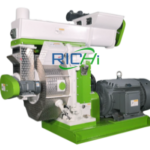
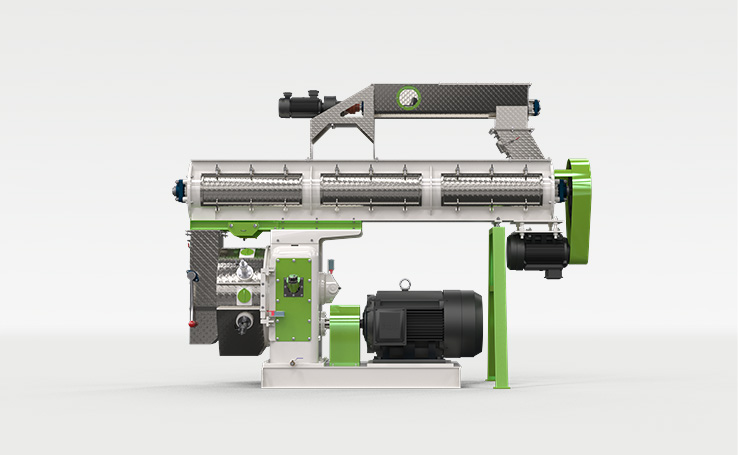
The pelletizing system can represent a significant part of a poultry feed plant because it involves the pellet mill itself as well as supporting equipment.
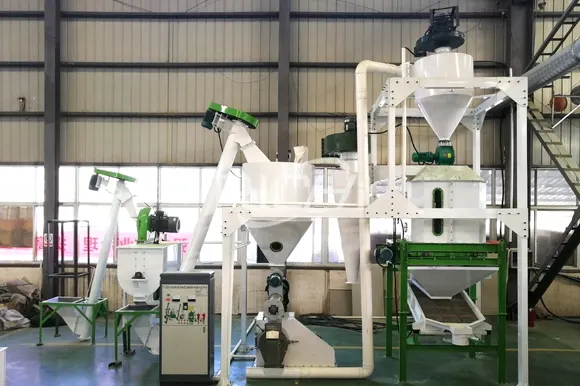
A typical pelletizing section may include a feeder, conditioner, pellet mill, cooler, crumbler where required, screener, and associated conveyors.
Conditioning is particularly important because steam and moisture can influence pellet quality and processing efficiency.
The pellet mill compresses the conditioned feed through a die. The resulting pellets then enter the cooling stage.
Cooling reduces product temperature and stabilizes the pellets before screening or storage.
The exact equipment arrangement depends on the required capacity and product specifications.
How Important Is Automation?
Automation can have a major influence on both investment and plant operation.
A manually operated system may require workers to control weighing, feeding, conveying, and packaging.
A semi-automatic system can automate selected processes while retaining manual control over others.
A highly automated plant may use computerized batching, automatic ingredient dosing, centralized process control, automatic alarms, and production data recording.
Automation generally requires additional electrical equipment, sensors, control cabinets, software, and installation work.
However, it can also reduce dependence on manual operation and improve process repeatability.
The appropriate automation level depends on production scale, labor costs, desired consistency, and the owner’s operational preferences.
Does Storage Add Significantly to Project Cost?
Storage can be an important part of the overall investment because both raw materials and finished feed need appropriate space.
A poultry feed plant may require separate storage for grains, protein meals, additives, liquids, and finished products.
Bulk raw materials may be stored in silos or warehouses.
Small quantities of additives may require dedicated storage areas to prevent contamination or loss.
Finished feed can be stored in bags or bulk bins depending on how it will be distributed.
Storage design also affects material flow. If raw materials are moved repeatedly over long distances, conveying costs and energy use can increase.
A well-planned layout minimizes unnecessary movement between receiving, processing, and storage areas.
How Does Packaging Influence the Plant Design?
Packaging requirements vary according to the intended market.
Feed sold directly to local farms may be packaged in standard bags.
Large commercial customers may prefer bulk delivery, which reduces the need for individual packaging.
If bagged feed is required, the plant may need automatic weighing, bag filling, sewing or sealing, conveying, and palletizing equipment.
The packaging section should match the expected daily output.
For example, a small operation may use semi-automatic bagging equipment, while a high-capacity factory may require automated packing and pallet handling.
Packaging is therefore not simply an end-of-line accessory. It can influence labor requirements, floor space, storage, and logistics.
Can Poultry Feed Plants Also Handle Animal Waste?
Poultry production generates manure that may be used as an organic fertilizer resource after appropriate processing.
However, feed manufacturing and manure processing are technically different operations.
Feed production is focused on producing nutritionally controlled material for animals, while manure processing is intended to stabilize organic waste and produce a fertilizer or soil amendment.
In some integrated agricultural projects, separate processing areas can be established for these two material streams.
For example, a chicken manure pellet machine to turn chicken waste into organic fertilizer may be included in a broader farm-waste utilization project.
Related Post: https://commercialpelletmill.com/chicken-manure-pellet-machine/
This type of equipment should not be treated as part of the poultry feed manufacturing process itself. The two systems have different hygiene requirements, raw-material characteristics, and final products.
Keeping the material flows separate is particularly important for biosecurity and product safety.
What Role Does Dust Collection Play?
Feed manufacturing can generate dust during receiving, grinding, conveying, mixing, and packaging.
Dust collection systems help control airborne particles and maintain a cleaner working environment.
A typical system may include dust hoods, ducts, filters, fans, and collection units.
The exact design depends on the number of dust-generating points and the layout of the facility.
Dust control should be considered during plant design rather than added as an afterthought.
In addition to workplace cleanliness, proper dust management can help protect machinery and reduce material losses.
Large industrial plants may require more comprehensive systems because many pieces of equipment operate simultaneously.
How Does the Factory Building Affect the Total Budget?
The equipment itself is only one component of a complete project.
The building may need foundations, structural support, flooring, drainage, ventilation, electrical wiring, lighting, fire-safety systems, and access routes.
The height of the building can also matter.
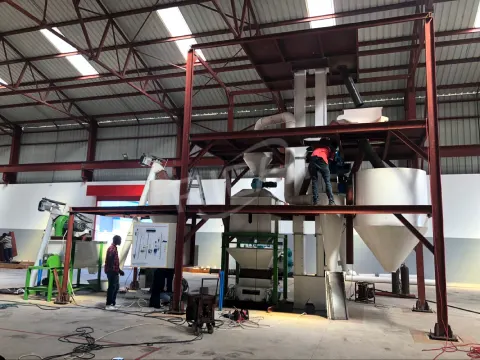
Multi-level feed plants often use gravity to move ingredients between process stages, which can reduce certain conveying requirements.
However, taller buildings may require more structural investment.
A horizontal layout can simplify construction in some situations but may require more mechanical conveying equipment.
The choice depends on site conditions, local construction costs, available land, and process requirements.
What About Electricity and Utility Requirements?
Feed plants require electricity for motors, conveyors, fans, grinders, pellet mills, pumps, compressors, control systems, and other equipment.
Larger plants may require substantial electrical capacity.
Steam may also be needed for conditioning when producing high-quality pellets. This means a boiler or suitable steam source may become part of the project.
Water requirements vary depending on the process and cleaning arrangements.
Compressed air may be required for pneumatic equipment and automated systems.
Utility planning should be completed before installation because insufficient electrical or steam capacity can limit the actual production rate.
Why Should Equipment Capacity Be Compared Carefully?
Equipment manufacturers may present capacity ranges, but actual production can vary depending on raw materials and operating conditions.
For example, a pellet mill processing a high-fiber formulation may have different throughput from the same machine processing a formulation with different physical characteristics.
Grinding capacity can also change according to grain hardness and desired particle size.
Therefore, capacity should be discussed together with the specific feed formula, moisture, particle size, and operating hours.
For a complete project, the capacity of connected machines should also be balanced.
There is little benefit in installing a high-capacity pellet mill if the grinding or mixing section cannot supply enough prepared feed.
How Can a Project Budget Be Structured?
A preliminary budget can be divided into several categories:
- Raw-material handling
- Grinding and preparation
- Batching and weighing
- Mixing
- Pelletizing
- Cooling and screening
- Conveying
- Packaging
- Storage
- Dust collection
- Electrical and automation
- Building and civil works
- Installation and commissioning
- Utilities and supporting infrastructure
This structure is more useful than looking at a single machine quotation.
Two plants with similar production capacity can have significantly different total investments because their automation, storage, packaging, building, and raw-material requirements are different.
How Can a Poultry Feed Plant Be Made More Cost-Efficient?
Cost efficiency does not necessarily mean selecting the cheapest equipment.
The first step is to avoid unnecessary process stages.
If raw materials are already clean and properly sized, excessive preparation equipment may not be needed.
The second step is to match capacity to actual demand.
The third is to design the material flow carefully so that conveying distances are reasonable.
The fourth is to consider maintenance requirements. A machine that is inexpensive initially but difficult to maintain may create higher operating costs later.
Energy efficiency is also important. Grinding, drying, steam generation, and pelletizing can consume substantial energy.
Finally, future expansion should be considered. A modular design may allow production capacity to increase later without rebuilding the entire facility.
What Questions Should Be Asked Before Requesting a Quotation?
Before contacting an equipment supplier, it is useful to prepare detailed project information.
Important questions include:
- What poultry species will the feed be used for?
- What feed types will be produced?
- What is the target production capacity?
- Will the final product be mash, pellet, or crumble?
- What are the main raw materials?
- What are their typical moisture levels?
- Are grains purchased whole or already ground?
- Is steam available?
- What pellet diameters are required?
- How much finished feed must be stored?
- Will the feed be bagged or delivered in bulk?
- How much automation is desired?
- What electrical supply is available?
The more complete this information is, the more meaningful an equipment proposal becomes.
How Should Different Equipment Suppliers Be Compared?
Supplier comparison should focus on technical compatibility rather than only the initial quotation.
A useful comparison can include equipment configuration, rated capacity, material compatibility, energy requirements, automation level, wear parts, installation requirements, maintenance arrangements, and technical documentation.
It is also useful to determine whether the quoted price covers all necessary components.
A low equipment quotation may not include conveyors, control cabinets, dust collection, installation, or other supporting systems.
Conversely, a higher quotation may include a more complete configuration.
For this reason, quotations should be compared on an equivalent scope of supply.
When researching manufacturers, pelleting machine can be considered as one source of information about feed-processing equipment and complete production-line configurations.
What Is the Most Practical Way to Estimate Investment?
Rather than asking for a single universal figure, begin by defining the production process.
For example, a small farm feed plant may require only grinding, mixing, and basic pelletizing.
A medium commercial plant may add automated batching, conditioning, cooling, screening, storage, and packaging.
A large industrial plant may require multiple production lines, large silos, automated logistics, centralized control, laboratory facilities, and sophisticated dust-management systems.
Each additional function changes the project scope.
The final investment should therefore be estimated after the production capacity, raw materials, product range, automation level, site conditions, and storage requirements have been established.
Conclusion: What Really Determines the Cost?
The cost of a poultry feed plant is determined by the complete production system rather than by the pellet mill alone.
Capacity, feed formulation, raw-material condition, grinding requirements, mixing accuracy, pelletizing technology, automation, storage, packaging, utilities, building construction, and installation can all influence the total investment.
A useful planning method is to start with the desired feed products and work backward through the production process.
First determine what feed will be produced. Then identify the raw materials and their characteristics. Next determine the required capacity and process stages. Finally, select equipment that matches those requirements.
This approach provides a more realistic basis for comparing quotations and estimating investment.
The most important point is that there is no universal plant configuration suitable for every poultry feed project. A small farm operation and a large commercial factory have fundamentally different requirements.
By treating the project as a complete processing system rather than a collection of individual machines, investors can better understand where capital is needed, which equipment is essential, and which features can be added later as production develops.