





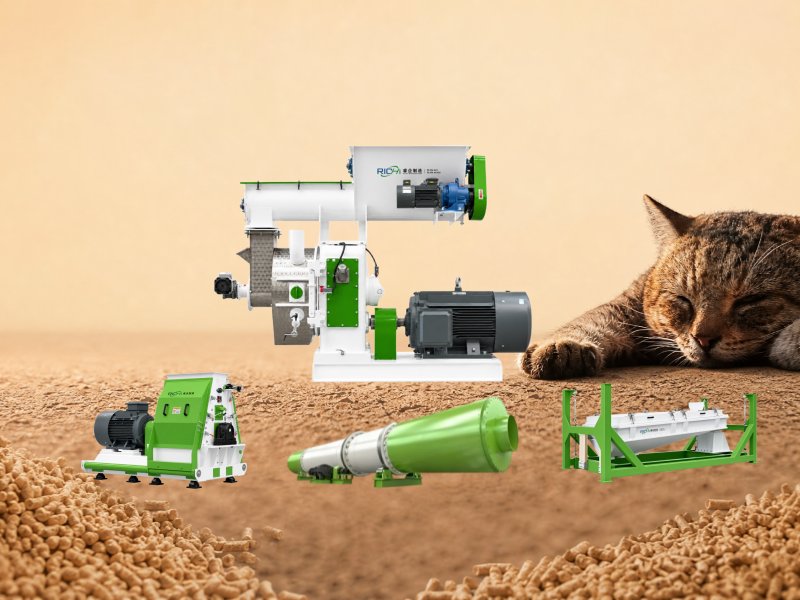
The cat litter market includes small private-label brands, woodworking companies, pet-product manufacturers, regional distributors, and large factories. Although all of them may sell similar-looking products, their manufacturing requirements can be completely different.
A business producing 300 kilograms per hour does not need the same system as a factory targeting several tons every hour.
Likewise, a company with an existing sawmill may already have part of the required infrastructure, while a new investor may need to build the entire process from the beginning.
Choosing the right production model therefore starts with understanding the business behind the product.
Three Common Business Models
The first model is the integrated wood processor.
This company already generates sawdust and wants to turn part of that residue into a finished cat litter product. The advantage is direct access to raw material.
The second model is the dedicated pet-product manufacturer.
This business purchases sawdust from external suppliers, processes it, and sells branded cat litter through distributors, retailers, or online channels.
The third model is the multi-product biomass processor.
This type of company may produce several pelletized products from different raw materials and wants a flexible production system that can support pet litter alongside other applications.
Each model requires a different approach to equipment, storage, quality control, and capacity planning.
Why Feedstock Availability Comes First
Before investing in production machinery, businesses should calculate how much suitable sawdust is actually available.
The number of tons generated by a woodworking factory is not automatically equal to the quantity available for cat litter production.
Some material may already be sold to other customers.
Some may have unsuitable contamination.
Some may vary significantly in moisture.
Some may be too coarse or inconsistent.
A realistic project begins by calculating usable raw material rather than total wood waste.
This single distinction can change the correct equipment size.
Matching Capacity to Daily Production
Suppose a business has enough sawdust to process 1,000 tons annually.
That does not necessarily mean a line capable of producing several tons every hour is appropriate.
The planned operating schedule matters.
A factory operating one shift has a different capacity requirement from a facility running continuously.
Maintenance downtime should also be considered.
Seasonal supply changes can further complicate the calculation.
Therefore, production capacity should be estimated from annual material availability, expected working hours, and market demand.
A Flexible Capacity Range Can Help Growing Businesses
Some businesses prefer equipment that leaves room for future expansion.
Others want to minimize initial investment and increase production only after market demand has been proven.
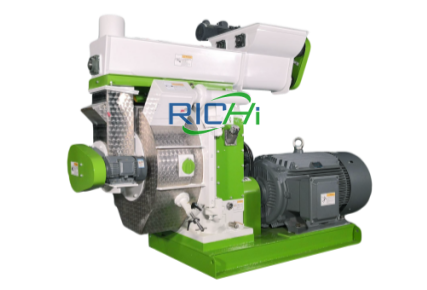
For companies comparing a 0.5-4 T/H sawdust pellet making machine for sale, the broad capacity range can be useful as a reference during project planning.
The key is to identify where the business sits within that range.
A small start-up may not need maximum output immediately.
A regional supplier with established customers may require significantly higher throughput.
A flexible design can sometimes allow staged expansion rather than forcing a business into a single fixed capacity from day one.
The Difference Between Raw Material and Final Product
Sawdust is a raw material.
Cat litter is a finished product.
Between the two is a manufacturing system that controls moisture, size, density, shape, dust, and packaging.
That means simply installing sawdust cat litter making machine does not solve every production problem.
A successful factory must manage the entire material journey.
The raw material may need storage before processing.
Drying may be necessary.
Fine particles may require conditioning.
After forming, the pellets may need cooling.
Screening may remove particles outside the target size.
Only then is the product ready for packaging.
Why Product Specifications Should Be Written First
Before equipment selection, manufacturers should create a product specification sheet.
It can include:
Target pellet diameter.
Average bulk density.
Desired moisture level.
Maximum fines.
Absorption expectations.
Packaging size.
Storage period.
Target production capacity.
Once these values are defined, equipment discussions become more objective.
Without a product specification, manufacturers often choose machinery based on general capacity claims, which may not correspond to their actual market requirements.
The Importance of Consistent Pellet Dimensions
Uniformity has both functional and commercial value.
Customers generally expect the same product to perform similarly from one bag to the next.
Large variations in pellet size can affect litter depth, liquid absorption, dust generation, and packaging density.
Screening therefore serves more than an aesthetic function.
It helps maintain the desired size range.
Oversized particles can be separated.
Excessively small particles can also be removed or returned to the process, depending on the plant design.
This creates a more controlled finished-product stream.
Drying as a Quality-Control Stage
Many manufacturers view drying only as a way to lower moisture.
A better perspective is to treat drying as a quality-control operation.
The objective is to bring the raw material into a consistent condition before forming.
This can improve production stability and reduce variation.
For a wood-processing business, an important link between raw-material handling and final product quality is therefore moisture management.
A well-designed drying system should consider feedstock moisture, required output, heat source, airflow, residence time, and downstream capacity.
What About Different Wood Sources?
A manufacturer may want to accept sawdust from several suppliers.
This can increase raw-material flexibility, but it also creates a quality-control challenge.
Different wood species may vary in density.
Different suppliers may use different production processes.
Storage conditions can also influence moisture.
To maintain consistent cat litter, incoming material may need inspection before being introduced to the production line.
This can involve checks for contamination, particle size, moisture, and material identity.
A standardized receiving procedure can prevent unsuitable material from entering the system.
When Existing Equipment Can Be Reused
Companies with an existing woodworking factory may already have some of the required infrastructure.
Storage silos, conveyors, dust collectors, crushers, and drying units may be adaptable.
However, compatibility must be evaluated carefully.
A machine designed for fuel pellets may not automatically provide the same product characteristics required by cat litter.
Cat litter is a consumer product with specific requirements related to cleanliness, dust, appearance, and packaging.
Existing equipment can be reused where technically suitable, but product requirements should remain the priority.
Designing for Future Market Expansion
A business may initially sell only sawdust litter.
Later, it may add other biodegradable litter products.
That possibility can affect the production layout.
For example, storage areas can be designed for multiple raw materials.
The feeding system may need additional dosing points.
Packaging equipment may require different bag sizes.
Control systems can be planned for future recipes.
A little flexibility during the initial engineering stage can make later expansion easier.
The Role of Automation
Automation becomes more useful as production increases.
Automatic feeding helps regulate material flow.
Moisture monitoring can reduce variability.
Automated screening can maintain product consistency.
Automatic packaging can improve labor efficiency.
However, automation should match the business model.
A small operation does not necessarily need the same control architecture as a large factory.
The correct question is not “How automated can we make it?”
It is:
“Which automated functions create measurable value for this operation?”
Why Testing Matters Before Commercial Production
A sample production test can reveal information that a catalogue cannot.
It can show whether the raw material forms properly.
It can reveal expected output under actual conditions.
It can show how much cooling is required.
It can reveal the proportion of fines.
It can also help determine whether the final product meets the company’s target specifications.
These tests are especially useful when the business plans to use several sawdust sources.
Buying Equipment Around a Business Model
Manufacturers comparing a pellet mill for sale should consider the machine within the wider business model.
Questions should cover raw material, capacity, operating hours, product specifications, utilities, maintenance, spare parts, floor area, and packaging.
The cheapest machine is not necessarily the lowest-cost solution if it creates downstream bottlenecks.
Likewise, the largest machine is not automatically the most efficient choice if raw-material supply is limited.
Equipment should be matched to the business rather than selected independently.
The Economics of Product Density
Density influences transport.
A product that is too light may require more storage volume and more truck space.
A product that is heavily compacted may change its absorption and breakdown characteristics.
Manufacturers therefore need to balance logistics with product performance.
This is another reason product specifications should be defined before finalizing the process.
The target is not simply maximum density.
The target is an economically practical product that performs well for its intended use.
Building a Product Brand, Not Just a Factory
A successful cat litter manufacturer is ultimately selling trust.
Customers want to know that every bag will behave similarly.
They expect predictable absorption, manageable dust, and reliable packaging.
That means factory quality control and brand reputation are closely connected.
A stable manufacturing process supports stable consumer expectations.
For a private-label business, consistency may be especially important because the manufacturer may have no direct relationship with the final consumer.
Conclusion
There is no universal cat litter production model.
A woodworking company, pet-care startup, regional supplier, and industrial manufacturer may all require different plant configurations.
The right approach is to begin with raw-material availability, define the desired finished product, calculate practical annual demand, and then determine the appropriate capacity and equipment.
A carefully planned production model gives businesses more control over quality, operating costs, expansion, and market positioning.
The most successful projects are rarely the ones with the most impressive machine specifications.
They are the ones where raw materials, equipment, product requirements, and commercial strategy fit together.