

Feed is one of the largest operating expenses in poultry farming. Whether a farm raises broilers, layers, breeders, ducks, or other poultry, controlling feed costs can have a direct impact on overall profitability. However, reducing feed costs does not simply mean buying the cheapest ingredients or reducing the nutritional value of the diet. Poor-quality feed can slow growth, reduce egg production, increase mortality risks, and ultimately cost more than a properly formulated diet.
A better approach is to reduce unnecessary expenses throughout the entire feed production process while maintaining nutritional quality and pellet performance. This includes selecting suitable local ingredients, improving purchasing and storage, optimizing feed formulas, reducing processing losses, controlling energy consumption, improving equipment efficiency, and selecting an appropriately sized poultry feed line.
For farms producing their own feed, the opportunity to reduce costs can be particularly significant. Instead of purchasing finished commercial feed, farmers can source suitable raw materials locally and process them according to their own requirements. A well-designed feed production system can help reduce transportation costs, improve ingredient utilization, minimize waste, and provide greater control over feed quality.
This article explains practical strategies for reducing the cost of making poultry feed while maintaining consistent quality and production efficiency.
1. Understand the Main Components of Poultry Feed Cost
Before trying to reduce costs, producers need to understand where their money is being spent.
The total cost of poultry feed can include:
- Raw materials
- Transportation
- Storage
- Grinding
- Mixing
- Pelleting
- Cooling
- Packaging
- Electricity
- Labor
- Equipment maintenance
- Wear parts
- Feed losses
- Waste and rejected products
Raw materials usually represent the largest part of the total cost, but processing and logistics can also have a meaningful impact, especially in commercial production.
Therefore, cost reduction should focus on the entire production system rather than one individual expense.
2. Use Locally Available Feed Ingredients
One of the most effective ways to reduce poultry feed costs is to use suitable local ingredients.
Depending on the region, farmers may have access to:
- Corn
- Wheat
- Sorghum
- Barley
- Rice bran
- Wheat bran
- Soybean meal
- Sunflower meal
- Peanut meal
- Rapeseed meal
- Cassava products
- Other agricultural by-products
Local ingredients can reduce transportation costs and dependence on imported materials.
For example, a poultry farm located in a corn-producing area may be able to purchase corn directly from local farmers instead of buying processed feed ingredients transported over long distances.
However, local availability should not be the only consideration. Each ingredient must be evaluated for nutritional value, safety, moisture, fiber, protein, and energy content.
3. Compare Ingredients by Nutritional Value, Not Just Price
A common mistake is to choose ingredients based solely on their price per ton.
Suppose Ingredient A costs less per ton than Ingredient B but contains substantially less usable energy or protein. Using more of Ingredient A may actually increase the total feed cost.
Therefore, producers should compare ingredients based on their contribution to the complete feed formula.
Useful indicators include:
- Cost per unit of protein
- Cost per unit of energy
- Cost per usable amino acid
- Fiber contribution
- Mineral contribution
- Processing requirements
A feed formulation program can help determine the most economical combination of ingredients while meeting nutritional requirements.
4. Optimize the Feed Formula
Feed formulation has a major influence on production costs.
The objective is not simply to create the cheapest formula. The objective is to create the lowest-cost formula that meets the nutritional requirements of the target poultry.
A balanced formula should consider:
- Metabolizable energy
- Crude protein
- Amino acids
- Calcium
- Available phosphorus
- Fiber
- Fat
- Vitamins
- Minerals
Different birds require different nutritional levels.
For example, broiler starter feed should not use exactly the same formula as layer feed. Young chicks, growing broilers, laying hens, and breeder birds have different nutritional requirements.
Optimizing the formula according to bird age can prevent unnecessary nutrient expenditure.
5. Buy Raw Materials at the Right Time
Ingredient prices can fluctuate throughout the year.
Harvest periods may offer opportunities to purchase certain grains at more competitive prices.
Farmers with sufficient storage capacity can purchase appropriate quantities when prices are favorable.
However, bulk purchasing only reduces costs if the ingredients can be stored properly.
Buying large quantities and then losing them to moisture, insects, mold, or contamination is not economical.
Therefore, purchasing strategy should be connected to storage capacity and ingredient shelf life.
6. Purchase Ingredients Directly When Possible
Buying directly from farmers, grain processors, oilseed mills, or other local suppliers can sometimes reduce intermediary costs.
For example, a feed producer may establish long-term relationships with local corn farmers.
This can provide:
- More stable supply
- Better purchasing prices
- Greater traceability
- Reduced transportation distance
- Improved communication with suppliers
For larger feed producers, long-term contracts may also help stabilize raw material prices.
7. Reduce Transportation Costs
Transportation is often overlooked when calculating feed costs.
A raw material may appear inexpensive at the supplier’s location but become expensive after transportation.
Therefore, producers should calculate the delivered cost rather than the purchase price alone.
A practical sourcing strategy may include:
Local Supplier → Short-Distance Transportation → Feed Plant
instead of:
Distant Supplier → Long-Distance Transportation → Multiple Handling Points → Feed Plant
A strategically located feed plant can therefore reduce logistics costs.
8. Store Raw Materials Properly
Poor storage can turn inexpensive ingredients into expensive waste.
Common storage problems include:
- Moisture absorption
- Mold growth
- Insect infestation
- Rodent damage
- Oxidation
- Contamination
A proper storage facility should be:
- Dry
- Clean
- Well ventilated
- Pest controlled
- Easy to inspect
- Protected from rain and flooding
Bulk materials can be stored in silos or bins, while bagged ingredients should be placed on pallets rather than directly on the floor.
Good storage reduces material losses and protects feed quality.
9. Reduce Raw Material Waste
Feed ingredients can be lost during:
- Loading
- Unloading
- Conveying
- Grinding
- Mixing
- Pelleting
- Packaging
- Cleaning
Even a small percentage of loss can become significant when producing hundreds or thousands of tons of feed.
For example, if a feed plant processes 10,000 tons annually, a 2% material loss represents 200 tons of feed ingredients.
Improving equipment sealing, transfer systems, dust collection, and operator procedures can help reduce these losses.
10. Improve Grinding Efficiency
Grinding is necessary for many poultry feed formulas, but it consumes electricity.
A hammer mill that operates inefficiently can increase production costs.
Several factors affect grinding efficiency:
- Raw material moisture
- Screen size
- Hammer condition
- Feeding rate
- Airflow
- Motor efficiency
Worn hammers can reduce grinding efficiency and increase energy consumption.
The screen should also be selected according to the desired particle size.
The objective is to achieve appropriate grinding without unnecessarily producing extremely fine particles.
11. Avoid Excessively Fine Grinding
Very fine grinding may improve certain feed characteristics, but grinding everything as finely as possible is not always economical.
Excessive grinding can:
- Increase electricity consumption
- Increase dust
- Reduce hammer mill capacity
- Increase maintenance requirements
- Increase production costs
The appropriate particle size should be determined according to the poultry species, feed formula, pellet diameter, and production requirements.
A balanced grinding strategy can provide good pellet quality without excessive energy consumption.
12. Improve Mixing Efficiency
Mixing consumes both time and electricity.
If mixing takes much longer than necessary, production capacity decreases and energy costs increase.
On the other hand, insufficient mixing can create nutrient inconsistencies.
A suitable mixer should provide uniform distribution within an appropriate mixing time.
Operators should monitor:
- Mixing time
- Batch size
- Ingredient sequence
- Liquid addition
- Mixer condition
A properly maintained mixer can improve both productivity and feed uniformity.
https://pelletisingmachine.com/animal-feed-mixer-machine
13. Reduce Pelletizing Energy Consumption
Pelletizing is one of the major energy-consuming processes in a feed factory.
Energy consumption can be affected by:
- Feed formula
- Particle size
- Moisture
- Conditioning
- Die compression ratio
- Roller adjustment
- Pellet diameter
- Machine condition
If the die compression ratio is too high for the formula, the pellet mill may consume excessive electricity.
If the feed is poorly conditioned, the machine may need more power to compress the material.
Therefore, optimizing conditioning and die selection can reduce energy consumption.
14. Use Steam Conditioning Effectively
Steam conditioning can improve pellet quality while potentially reducing pellet mill energy consumption.
Steam adds heat and moisture to the feed before compression.
Proper conditioning can:
- Soften feed particles
- Improve starch gelatinization
- Increase pellet durability
- Reduce fines
- Improve pellet mill throughput
However, excessive steam use can increase energy costs and create cooling problems.
The goal is not to maximize steam consumption but to find the appropriate conditioning conditions for each feed formula.
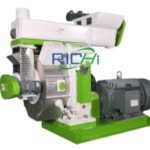
15. Select the Right Pellet Mill
The pellet mill is the core equipment of a commercial poultry feed production system.
Choosing a machine that is too large can increase unnecessary investment and energy costs.
Choosing a machine that is too small can create production bottlenecks and increase operating hours.
The pellet mill should be selected according to:
- Required capacity
- Feed formula
- Pellet diameter
- Operating schedule
- Expected future production
- Energy consumption
- Maintenance requirements
A properly sized pellet mill can improve production efficiency and reduce unnecessary operating costs.
16. Choose an Appropriate Poultry Feed Line
A complete poultry feed line should be designed according to the actual production requirements.
A typical process is:
Raw Material Cleaning → Grinding → Batching → Mixing → Conditioning → Pelleting → Cooling → Screening → Packaging
Not every farm needs the same equipment configuration.
A small poultry farm may use a compact semi-automatic system.
A medium-sized feed producer may need automatic batching, conveyors, conditioning, cooling, and screening.
A large commercial factory may require a fully automated system with centralized control and automatic packaging.
The key is to match the equipment configuration with actual production demand.
17. Avoid Over-Automation
Automation can reduce labor and improve consistency, but excessive automation may increase initial investment unnecessarily.
For example, a small farm producing several hundred kilograms of feed per day may not need a sophisticated fully automatic packaging system.
A semi-automatic system may provide a better balance between investment and labor costs.
Automation should therefore be introduced according to:
- Production capacity
- Labor availability
- Product variety
- Budget
- Future expansion
The best system is not necessarily the most automated one.
18. Reduce Labor Costs Through Better Layout
Factory layout can affect labor requirements.
A poor layout may require workers to move materials repeatedly between machines.
A well-designed layout allows materials to move logically through the production process.
For example:
Grinding → Batching → Mixing → Pelleting → Cooling → Screening → Packaging
A logical material flow can reduce:
- Manual handling
- Transportation time
- Worker fatigue
- Production delays
A compact and well-organized poultry feed line can therefore reduce operating costs without reducing production quality.
19. Minimize Pellet Breakage
Pellet breakage creates fines and wastes the energy already used to produce the pellets.
Breakage can occur during:
- Cooling
- Screening
- Conveying
- Elevating
- Packaging
- Transportation
Poor pellet durability may result from:
- Incorrect formula
- Inadequate conditioning
- Incorrect die compression
- Poor roller adjustment
- Excessive mechanical impact
Improving pellet durability can reduce the amount of feed that needs to be recycled.
20. Improve Cooling Efficiency
Fresh pellets need to be cooled before storage.
If the cooler operates inefficiently, additional energy may be required and pellet quality can suffer.
A properly sized counterflow cooler can efficiently remove heat and moisture.
Cooling efficiency depends on:
- Airflow
- Pellet temperature
- Pellet moisture
- Feed layer thickness
- Ambient conditions
- Cooler configuration
The cooler should be matched to the pellet mill’s output.
21. Recycle Fines Instead of Throwing Them Away
Pellet fines can often be recycled into the production process.
A screening machine separates qualified pellets from fines.
The fines can be returned to the mixer or pellet mill, depending on the production system.
This can:
- Reduce raw material waste
- Improve material utilization
- Reduce production costs
However, excessive fines indicate that the underlying pelleting process should be investigated.
Recycling should complement good pellet production rather than replace it.
22. Reduce Packaging Costs
Packaging can represent a meaningful expense for commercial feed manufacturers.
Costs include:
- Bags
- Printing
- Sewing or sealing
- Labor
- Storage
- Transportation
The packaging format should match the target market.
For farm use, larger bags may reduce packaging costs per ton.
For retail sales, smaller bags may be necessary.
Automatic packaging equipment can reduce labor costs at higher production volumes.
23. Maintain Equipment Regularly
Preventive maintenance can reduce long-term costs.
Unexpected equipment failures can lead to:
- Production downtime
- Emergency repairs
- Replacement costs
- Labor losses
- Delayed deliveries
Important equipment components to inspect include:
- Hammer mill hammers
- Screens
- Pellet mill die
- Pressure rollers
- Bearings
- Motors
- Conveyors
- Mixer components
- Cooler
- Packaging machine
Replacing worn parts at the appropriate time can maintain energy efficiency and production capacity.
24. Monitor Die and Roller Wear
The pellet mill die and rollers are wear components.
As they become worn, the pellet mill may require more energy to produce the same output.
Worn components can also cause:
- Lower capacity
- Poor pellet quality
- Increased fines
- Unstable operation
Regular inspection and appropriate replacement help maintain stable performance.
This is particularly important for commercial poultry feed producers operating the pellet mill for many hours each day.
25. Control Electricity Consumption
Electricity is a significant operating cost in a feed plant.
Major energy-consuming equipment includes:
- Hammer mills
- Pellet mills
- Conveyors
- Coolers
- Fans
- Compressors
- Packaging systems
Energy consumption can be reduced by:
- Maintaining motors properly
- Avoiding unnecessary idling
- Optimizing grinding
- Using appropriate die compression
- Maintaining stable feed rates
- Improving steam conditioning
- Reducing material blockages
- Selecting energy-efficient motors
Energy monitoring by production stage can help identify inefficient equipment.
26. Use a Preventive Maintenance Schedule
A simple maintenance schedule can significantly improve operating efficiency.
Daily
Check:
- Lubrication
- Abnormal vibration
- Machine temperature
- Feed flow
- Pellet appearance
Weekly
Inspect:
- Hammers
- Screens
- Rollers
- Conveyors
- Mixer components
Monthly
Evaluate:
- Motor performance
- Bearings
- Die condition
- Electrical systems
- Safety equipment
The actual schedule should follow the equipment manufacturer’s recommendations.
27. Reduce Feed Loss During Transportation
Feed can be lost after production as well.
Poor conveyor design, excessive transfer points, damaged bags, and rough loading can increase losses.
A good material handling system should minimize unnecessary transfer.
Bucket elevators, belt conveyors, screw conveyors, and other equipment should be properly selected according to the production capacity.
Finished feed should also be handled carefully to minimize pellet breakage.
28. Produce Feed According to Demand
Overproduction can increase costs through:
- Storage requirements
- Inventory losses
- Quality deterioration
- Working capital requirements
Feed should be produced according to realistic demand.
For farms, production planning should consider the number and age of birds.
For commercial feed factories, production schedules should reflect customer orders and inventory levels.
Better planning reduces unnecessary storage and waste.
29. Reduce Formula Costs Without Sacrificing Nutrition
Cost reduction should never rely on simply removing expensive ingredients.
Instead, consider:
- Alternative protein sources
- Locally available grains
- Suitable agricultural by-products
- Optimized amino acid supplementation
- Seasonal ingredient purchasing
- Precision formulation
For example, a high-cost ingredient may be partially replaced by another suitable ingredient if the overall amino acid and energy profile remains balanced.
Such changes should be evaluated by a qualified poultry nutritionist.
30. Monitor Feed Conversion
The cheapest feed per ton is not always the cheapest feed for poultry production.
A better economic indicator is feed cost per kilogram of weight gain or feed cost per unit of egg production.
For broilers, feed conversion ratio is particularly important.
If a cheaper feed causes poorer growth or worse feed conversion, the apparent savings may disappear.
Therefore, producers should evaluate both:
Feed Cost per Ton
and
Feed Cost per Unit of Poultry Production
This provides a more realistic assessment of feed economics.
31. Train Operators
Well-trained operators can reduce costs by preventing operational mistakes.
Operators should understand:
- Correct machine startup
- Feeding rates
- Steam adjustment
- Pellet mill operation
- Die and roller adjustment
- Lubrication
- Troubleshooting
- Emergency shutdown
- Cleaning procedures
A machine operated incorrectly may consume more energy and produce lower-quality pellets.
Training is therefore an investment in production efficiency.
32. Use a Complete Turnkey Solution
For farmers or investors planning a new feed factory, purchasing individual machines without considering the entire process can result in poor equipment matching.
A turnkey solution considers:
- Raw materials
- Feed formulas
- Production capacity
- Equipment configuration
- Factory layout
- Automation
- Energy consumption
- Future expansion
- Installation
- Operator training
This approach can reduce the risk of creating production bottlenecks.
A properly designed poultry feed line can ensure that grinding, mixing, pelleting, cooling, screening, and packaging capacities are appropriately matched.
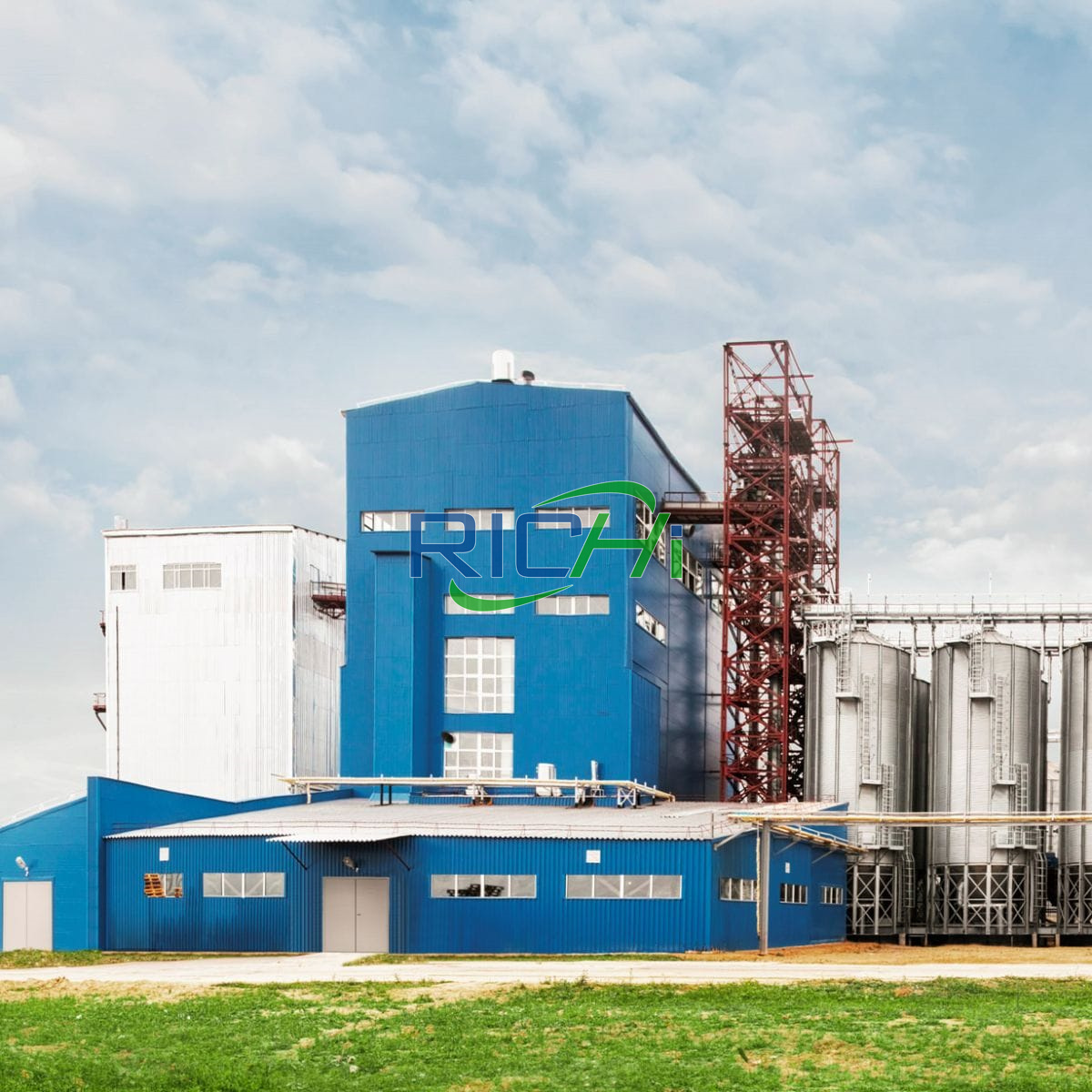
33. RICHI Poultry Feed Production Solutions
RICHI Machinery provides customized poultry feed processing equipment and turnkey solutions for farms and commercial feed manufacturers.
A complete poultry feed line can be designed according to:
- Target production capacity
- Poultry species
- Feed formulas
- Local raw materials
- Pellet diameter
- Factory space
- Automation requirements
- Investment budget
A typical process can include:
Cleaning → Crushing → Batching → Mixing → Conditioning → Pelletizing → Cooling → Screening → Crumbling/Coating → Packaging
For smaller farms, a compact and semi-automatic system can help control initial investment.
For commercial producers, a fully automated system can improve production efficiency and reduce labor requirements.
RICHI’s turnkey service can cover customized process design, equipment manufacturing, overseas transportation and customs clearance, installation and commissioning, operator training, spare parts supply, and long-term after-sales technical support.
By considering the entire production process rather than individual machines, the system can be designed to reduce unnecessary energy consumption, material losses, labor requirements, and maintenance costs.
34. A Practical Cost-Reduction Strategy
For a poultry farmer planning to manufacture feed independently, the following approach can be useful:
Step 1: Analyze Current Feed Costs
Determine how much is spent on feed per month and identify the main cost components.
Step 2: Investigate Local Ingredients
Find reliable suppliers of corn, wheat, soybean meal, rice bran, and other suitable materials.
Step 3: Compare Nutritional Costs
Evaluate ingredients according to their nutritional contribution rather than price alone.
Step 4: Optimize the Formula
Work with a qualified nutritionist to create a cost-effective balanced formula.
Step 5: Select Appropriate Equipment
Choose machines according to actual feed demand.
Step 6: Design the Production Flow
Ensure that equipment capacities are properly matched.
Step 7: Control Processing Costs
Monitor electricity, labor, maintenance, and material losses.
Step 8: Monitor Finished Feed
Check moisture, pellet quality, fines, and nutritional consistency.
Step 9: Track Poultry Performance
Evaluate feed conversion, growth, egg production, and overall farm performance.
Step 10: Continuously Optimize
Use production data to identify additional opportunities for savings.
Conclusion
Reducing the cost of making poultry feed requires a comprehensive strategy rather than simply selecting cheaper ingredients. The most effective approach combines cost-effective feed formulation, local ingredient sourcing, efficient processing, good storage, appropriate equipment selection, energy management, preventive maintenance, and careful production planning.
Using locally available ingredients can reduce transportation costs and dependence on imported feed materials, but these ingredients must be properly tested and formulated. Grinding and mixing should be optimized to avoid unnecessary energy consumption, while steam conditioning and pelletizing should be carefully controlled to improve pellet quality without excessive operating costs.
Equipment selection is equally important. A properly designed poultry feed line can integrate cleaning, grinding, batching, mixing, conditioning, pelleting, cooling, screening, and packaging into an efficient production process. Matching the capacity of each machine can prevent bottlenecks, reduce labor, minimize material losses, and improve energy efficiency.
Most importantly, cost reduction should never come at the expense of poultry nutrition. The real objective is to achieve the lowest practical feed cost while maintaining nutritional quality, pellet quality, bird performance, and production efficiency.
For farms and feed manufacturers, a well-designed poultry feed production system can transform local raw materials into consistent feed while providing greater control over costs. With proper formulation, equipment, maintenance, and production management, feed manufacturers can reduce unnecessary expenses and build a more efficient and profitable poultry feed operation.