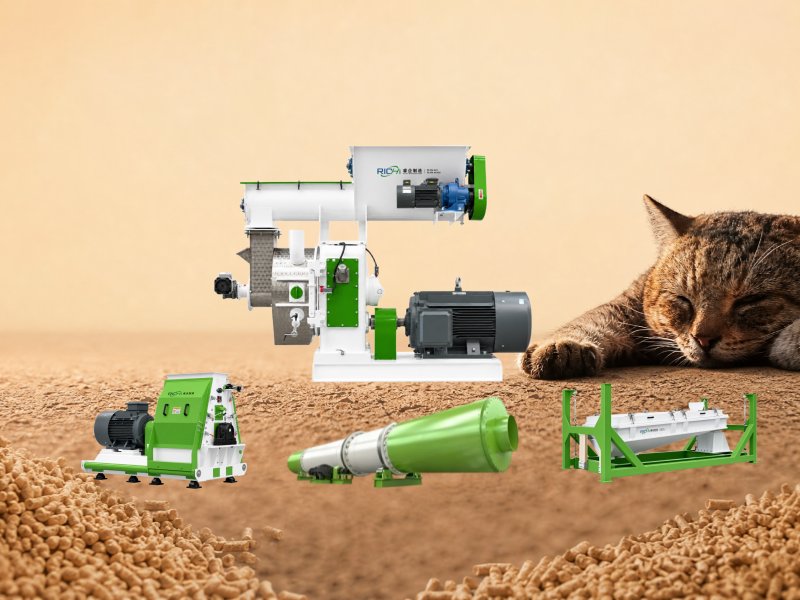


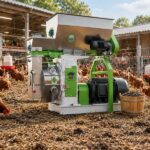



Miscanthus can look very different at the beginning and end of the biomass processing chain. In the field, it consists of bulky stalks and leaves that occupy considerable space. After processing, the same material can become compact pellets that are much easier to transport, store, and handle.
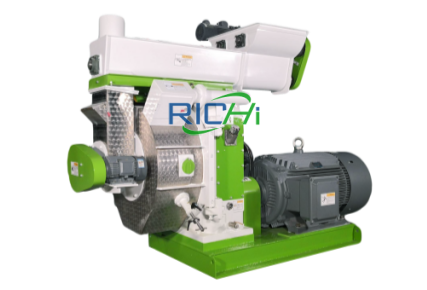
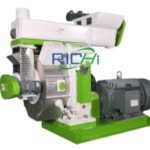
The transformation requires more than compression. A miscanthus pellet mill is the core forming machine, but consistent pellet production depends on several preparation stages before the material reaches the die.
Preparing the Harvested Material
The first stage is collection and preparation. Soil, stones, plastic, and other foreign materials should be removed because they can damage processing equipment and reduce product quality.
The physical condition of the material also needs to be assessed. Long stalks are difficult to feed directly into a pellet mill, so size reduction is normally required.
Crushing reduces the length of the fibers and creates a more uniform material. The goal is not simply to make the particles smaller but to prepare them for efficient drying and compression.
Moisture Control Comes Before Compression
Moisture has a major influence on pellet formation. If miscanthus is too wet, the pellet mill may require more energy and may have difficulty producing stable pellets. If it is excessively dry, the material can also become difficult to bind and may generate more fines.
For this reason, drying and moisture measurement are important parts of the production process when the raw material does not naturally meet the required conditions.
A rotary dryer or another suitable drying system can be integrated into the production line. The actual configuration should depend on incoming moisture, climate, throughput, and available heat sources.
Compression Creates the Final Shape
Once the material has been prepared, it enters the pelletizing section. Here, pressure forces the biomass through openings in the die, creating continuous strands that are cut into pellets.
The pellet mill must maintain consistent feeding and pressure. If the material flow changes significantly, pellet density and appearance can also change.
This is one reason fibrous biomass often benefits from a machine designed specifically for agricultural and grass materials rather than simply using a general-purpose pelletizing system.
A grass pellet making machine should therefore be evaluated according to how it handles the specific raw material, not only according to its advertised capacity.
Cooling Makes the Product Easier to Handle
Fresh pellets leave the compression process with elevated temperature and moisture conditions that may not be ideal for immediate storage. Cooling allows the product to stabilize before further handling.
A cooler can reduce pellet temperature while helping remove residual moisture. After cooling, a screen separates fines and undersized particles from the finished product.
The cleaned pellets can then move to storage or packaging. Proper storage is important because biomass pellets can absorb moisture from the surrounding environment.
Why Process Balance Matters
Every stage affects the next one. Poor crushing can make feeding inconsistent. Incorrect moisture can affect pellet formation. An undersized cooler can create a bottleneck after the pellet mill.
Therefore, commercial biomass production should be designed as a balanced system. Increasing the capacity of only one machine may not increase total plant output if another section cannot handle the additional material.
For people looking for a practical explanation of biomass pelleting, it is useful to view the process as a chain rather than a collection of unrelated machines.
A Flexible Approach to Biomass
Miscanthus can also be combined with other agricultural or forestry residues when the material characteristics are suitable. Such mixtures can help producers make better use of locally available biomass.
However, mixing materials changes moisture, particle structure, density, and compression behavior. Each combination should therefore be tested before large-scale production begins.
The final objective is to produce a consistent pellet that meets the requirements of its intended application. Depending on the project, the pellets may be used as biomass fuel or, with an appropriate formulation and processing approach, for other pelletized agricultural applications.The complete transformation from harvested grass to finished pellets demonstrates why the pellet maker is only one component of a successful biomass operation. Effective preparation, controlled moisture, stable feeding, proper compression, cooling, screening, and storage all contribute to the final product.
view details: https://www.richimanufacture.com/miscanthus-pellet-mill/